Insights
Inside Kering’s Gucci Reset, Can Strategy and Culture Realign in Time?
When Kering gathers investors in Florence, the symbolic weight of the location is hard to ignore. It is the birthplace of Gucci, and now, the focal point of its most pressing challenge.
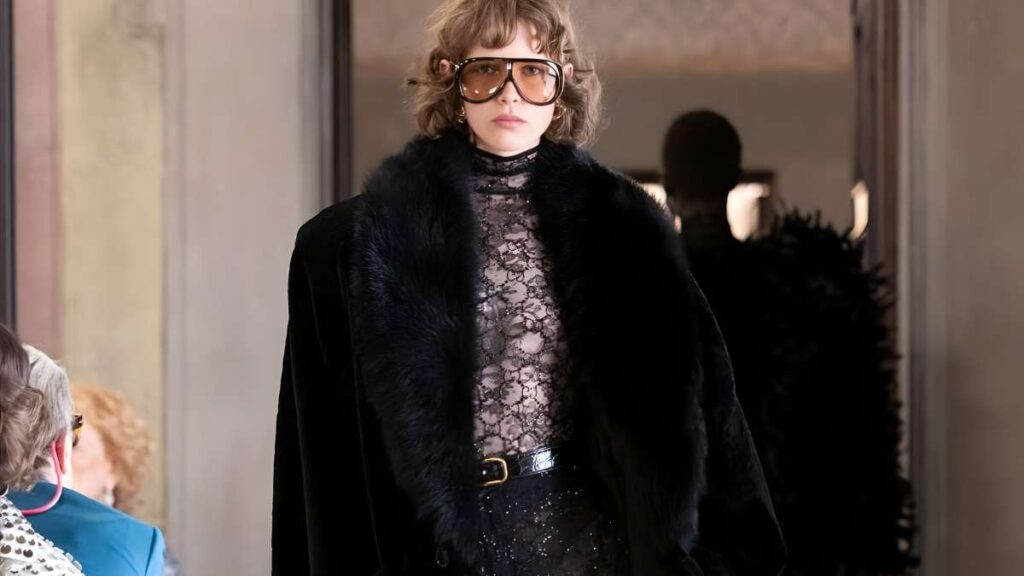
Once the defining force within Kering’s portfolio, Gucci has become its biggest vulnerability. With nearly 40 percent of group revenues tied to the brand in 2025, its slowdown is no longer a brand issue, it is a structural one.
A Brand Facing Multi-Layered Friction
The challenges surrounding Gucci are not singular, they are systemic. As Flavio Cereda puts it:
“Gucci has had all sorts of issues. It’s had issues on distribution. It’s had issues on product. It’s had issues on pricing.”
This is not a seasonal dip or a creative misstep. It reflects a deeper misalignment between product, positioning, and consumer perception.
His sharper observation cuts deeper into the brand’s current reality:
“Do people care about Gucci today? I don’t think they do. Can people care about Gucci in six months’ time? It’s perfectly possible. We just don’t know.”
That uncertainty is the real risk. In luxury, relevance operates on momentum, and Gucci’s has clearly stalled.
The Stakes for Kering
For Kering, this is not a contained slowdown. It is a portfolio imbalance.While brands like Saint Laurent and Bottega Veneta continue to hold cultural and commercial ground, Gucci’s scale means its decline directly impacts group performance.
A 14 percent drop in Q1 2026 sales, bringing revenues to €1.35 billion, reinforces the urgency. Regional pressures compound the situation, with continued softness in China and broader geopolitical instability influencing global demand patterns. An 18 percent decline in Kering’s share price over six months signals that investor confidence is now tied closely to Gucci’s recovery timeline.
The De Meo and Demna Equation
Kering’s response is built around a dual reset, operational and cultural.
The appointment of Luca de Meo as CEO introduces a leadership style rooted in brand rebuilding and disciplined execution, shaped by his tenure at Renault. His role is clear, stabilize the structure.On the creative front, Demna steps in following his defining run at Balenciaga. His appointment signals a return to strong authorship, something Gucci has lacked in recent transitions.
In his own words, Demna frames the challenge with clarity: “The coexistence of heritage and fashion… Gucci only exists when both are in sync, when both nourish each other.”
This is not just a creative philosophy. It is the core tension Gucci must resolve, balancing its legacy with contemporary relevance without diluting either.
Between Expectation and Reality
Despite the strategic reshuffle, the numbers suggest that impact has yet to materialize.
The transition from Sabato De Sarno to Demna reflects Kering’s willingness to pivot quickly, but also highlights the absence of a stable creative direction over recent cycles.Analysts remain divided. While HSBC points toward a potential 2026 rebound driven by the new leadership pairing, others remain cautious.
As noted by ODDO BHF: “While the group’s trajectory is definitely moving in the right direction under the new CEO, Gucci’s turnaround is not yet reflected in the numbers and its timing remains uncertain.”
This gap between narrative and performance is where Gucci currently sits.
The Underlying Question
Gucci’s challenge is no longer about visibility or scale. It is about emotional reconnection.
The brand that once defined a cultural moment under Tom Ford in the 1990s now faces a different landscape, one where attention is fragmented and loyalty is harder to sustain. The question is not whether Gucci can return. It is whether it can redefine why it matters now.
The FH Take
Kering’s strategy is structurally sound, align leadership, reintroduce creative authority, and stabilize operations.But luxury turnarounds do not operate on strategy alone. They depend on timing, cultural resonance, and clarity of identity.
Gucci does not need reinvention for the sake of novelty. It needs precision, a clear point of view that cuts through both internal complexity and external noise.Until that alignment is visible in both product and perception, the turnaround remains a narrative in progress, not yet a reality.