Lifestyle
Top Sabyasachi Looks That Owned the Met Gala Narrative for Indian Fashion
As anticipation builds for the upcoming Met Gala, one name continues to quietly command global attention, Sabyasachi Mukherjee. Not through volume, but through precision. Not through trend-chasing, but through cultural authority.
Over the last few editions, Sabyasachi hasn’t just dressed celebrities. He has systematically repositioned Indian craftsmanship within the hierarchy of global fashion.
And if the past few years are anything to go by, the real question for 2026 isn’t who will attend, it’s how India will show up.
The Shah Rukh Khan Moment: When Bollywood Met Royal Archetype
The 2025 Met Gala marked a defining shift with Shah Rukh Khan making his debut in a custom Sabyasachi ensemble.
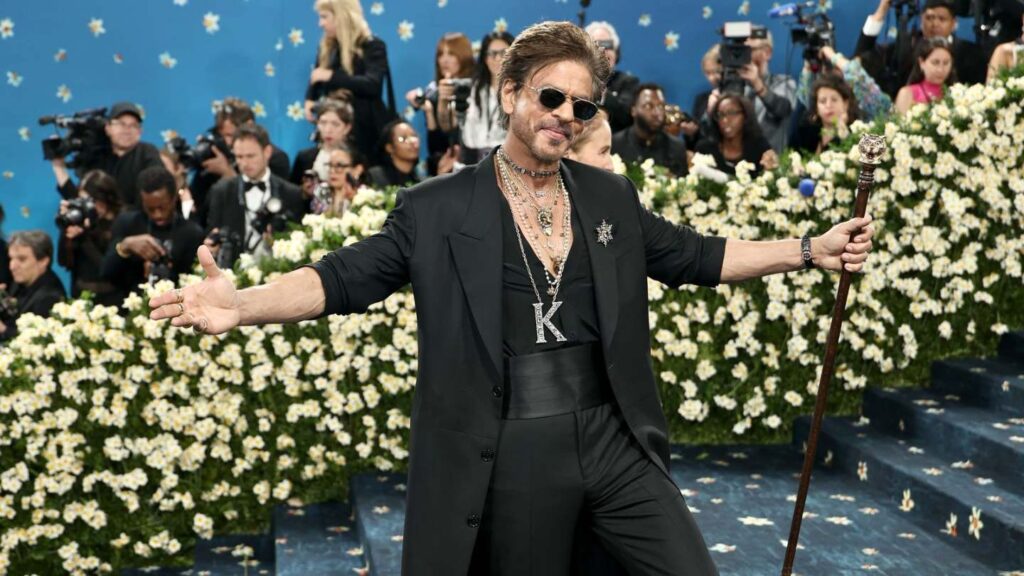
Dressed in a black-on-black Bengal silk bandhgala layered with Mughal-inspired embroidery, the look tapped into what can only be described as “Maharaja-core”. It wasn’t costume. It was coded storytelling.
At a global event often dominated by Western tailoring, this was a reminder that Indian menswear carries its own legacy of structure, symbolism, and power dressing.
More importantly, it signaled Bollywood’s evolving red carpet strategy, moving from safe tuxedos to culturally assertive fashion.
Alia Bhatt’s 23-Foot Statement
A year prior, Alia Bhatt delivered one of the most talked-about looks of the 2024 carpet.

Her mint-green, hand-embroidered saree, complete with a 23-foot train, was less about spectacle and more about scale of craftsmanship. Clocking 1,965 hours of handwork, the piece translated Indian embroidery into a format the Met Gala understands, drama with discipline.
It wasn’t just visually striking. It was strategically positioned.In a space where gowns dominate, Sabyasachi made the saree not just relevant, but competitive.
The Designer as the Muse
2024 also marked a historic first, with Sabyasachi himself walking the Met Gala carpet.
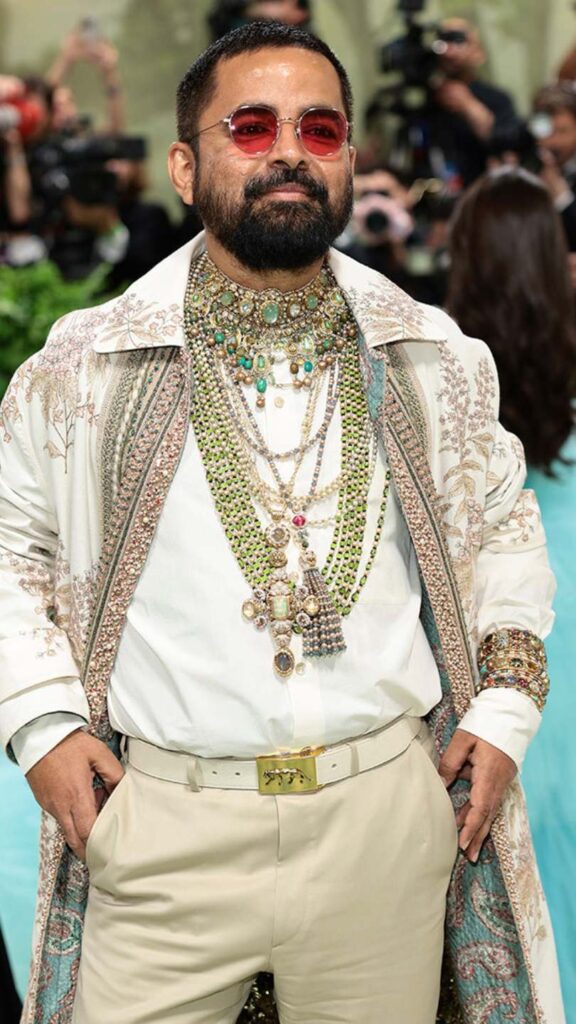
Clad in a hand-embroidered duster coat paired with his signature high jewellery, the appearance blurred the line between designer and subject. It was a subtle but powerful shift, placing Indian designers not behind the scenes, but at the center of the narrative.
In an industry where Western designers often dominate authorship, this was a quiet reclaiming of space.
Natasha Poonawalla’s Viral Fusion Play
Rewind to 2022, and Natasha Poonawalla arguably set the tone for what would follow.
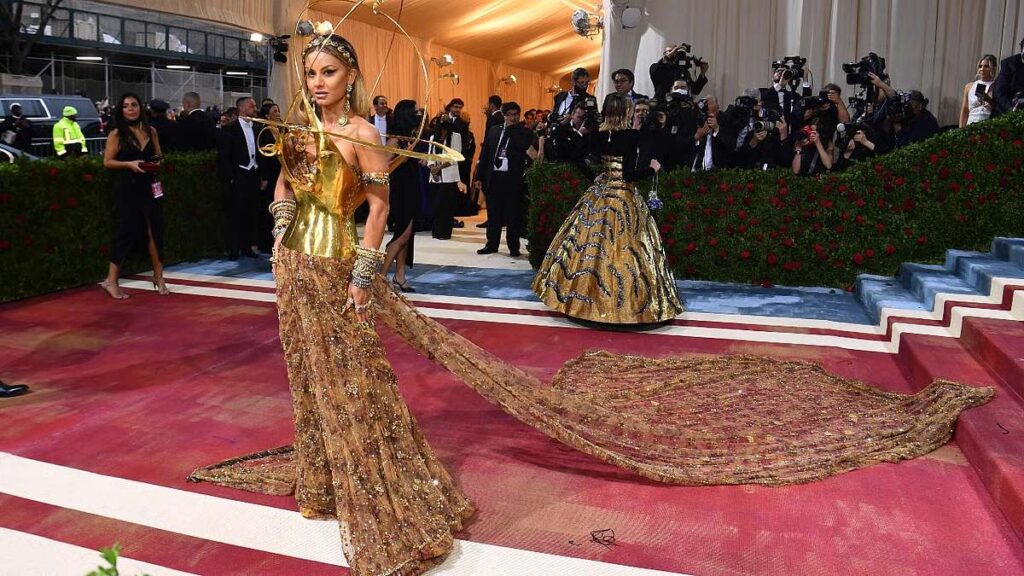
Her now-viral look, a Sabyasachi tulle saree paired with a Schiaparelli sculpted bustier, was a masterclass in cross-cultural styling.It ticked every Met Gala box. Drama, narrative, and visual impact. But more importantly, it reframed Indian wear as adaptable, experimental, and globally fluent.That moment wasn’t just a viral hit. It was a strategic entry point.
The Sabyasachi Formula: Heritage as Power
So what exactly is Sabyasachi doing differently?
He’s not diluting Indian craft for global acceptance. He’s scaling it.
From Bengal silk bandhgala to hand-embroidered sarees with extended trains, every look carries a consistent philosophy, antique soul, modern authority. The silhouettes remain rooted, but the presentation evolves to meet global expectations of couture spectacle.
This balance is what gives the brand its edge.
While many designers attempt to “modernize” Indian wear by simplifying it, Sabyasachi does the opposite. He amplifies its complexity and lets craftsmanship become the statement.
What This Means for Met Gala 2026
Heading into 2026, Sabyasachi’s growing dominance sets a clear precedent.
Indian representation at the Met Gala is no longer about participation. It’s about positioning.
Expect more culturally grounded looks, stronger narratives, and a continued push toward placing Indian craftsmanship at the center of global fashion conversations.
Because the real shift isn’t just aesthetic.
It’s strategic.
The Bigger Picture: India’s Fashion Soft Power
The Met Gala has always been more than a red carpet. It’s a stage for cultural diplomacy.
And through Sabyasachi’s growing presence, India is beginning to assert its fashion identity not as an exotic reference point, but as a primary voice.
For Indian designers and brands, this opens a clear opportunity, global relevance no longer requires Western validation, but it does demand clarity of narrative.
Sabyasachi has figured that out.
Now the question is, who follows next?