Runways
How Dior Cruise 2027 Reflects the Evolution of Resort Wear | Runway Trends 2026
With Cruise 2027, Dior transforms the runway into something far larger than a seasonal presentation. Staged at the Los Angeles County Museum of Art, the collection reinforces how luxury houses are increasingly using Cruise shows as immersive cultural campaigns, blending fashion, tourism, architecture, and regional identity into a single commercial narrative.
The Los Angeles setting was not incidental. Dior’s show leaned heavily into Hollywood mythology, vintage convertibles, cinematic lighting, and Californian visual nostalgia, creating an atmosphere that felt deliberately constructed for the global image economy. Cruise collections have evolved far beyond resort wardrobes for elite travelers; they now function as destination-led branding exercises designed to deepen local market relevance while generating worldwide digital visibility. In this case, Los Angeles becomes both backdrop and strategy, allowing Dior to merge French couture heritage with American cultural symbolism.
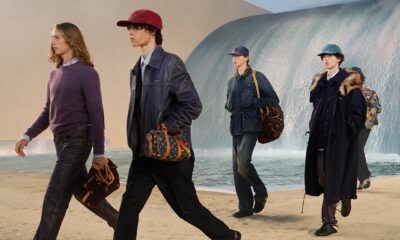
Creatively, the collection reflects a continued industry move toward what can be described as “structured functionalism.” Dior’s tailoring retains the architecture associated with the house, particularly through references to historic couture silhouettes, but the styling introduces a more industrial tension. Bouclé jackets with frayed finishes, shearling outerwear, leather trousers, patchwork scarves, and fluid lace dresses create a deliberate contrast between rigidity and softness. The layering feels transitional rather than occasion-specific, an important commercial distinction as luxury consumers increasingly demand wardrobes that function across climates, travel schedules, and lifestyle categories.
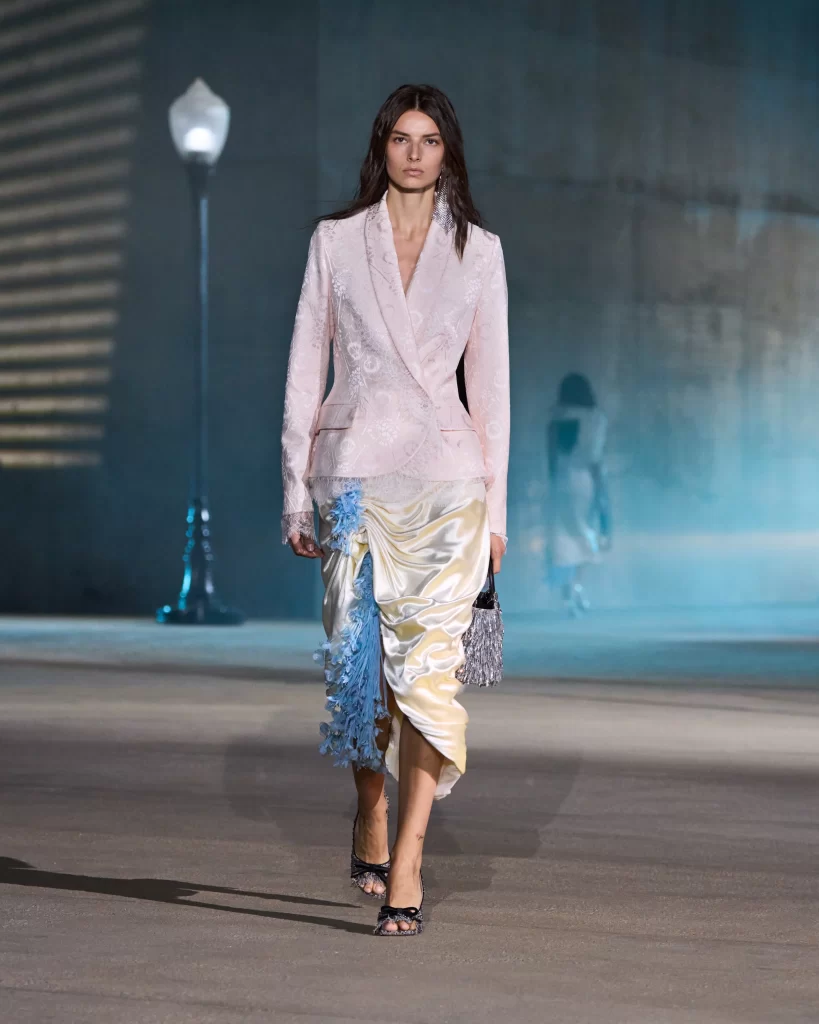
Accessories, unsurprisingly, remain central to the business strategy. Cruise 2027 introduces updated handbag silhouettes, including a refined Saddle variation and new crescent-base shoulder bags, while metallic detailing, visible hardware, and embellished surfaces inject a sharper energy into otherwise classic luxury codes. This reflects a wider market trend where heritage brands are subtly moving away from ultra-quiet luxury toward products with stronger visual identity. For younger luxury buyers, particularly Gen Z consumers, industrial accents and statement hardware offer a more contemporary entry point into established maisons without fully abandoning heritage aesthetics.
What continues to distinguish Dior’s Cruise strategy is its emphasis on cultural stewardship through artisan collaboration. Under Maria Grazia Chiuri, Cruise collections consistently incorporated localized craftsmanship and regional creative networks, from textile traditions to embroidery and artistic partnerships. While Cruise 2027 pivots visually toward Hollywood and Americana, the broader methodology remains intact: using regional cultural language as a framework for contemporary luxury storytelling rather than surface-level inspiration.
The result is a collection that speaks less about seasonal trends and more about where luxury fashion is positioning itself commercially. Dior Cruise 2027 is not simply selling clothing. It is selling cinematic escapism, culturally layered branding, and transitional luxury designed for a globally mobile consumer.
In today’s market, that narrative may be just as important as the garments themselves.