Celeb Style
How Lingling Kwong Became Dior’s Quiet Symbol of Architectural Elegance
There is a growing shift happening within celebrity luxury dressing. The era of excessive styling and logo-heavy glamour is slowly giving way to something far more calculated, silhouette-driven, and emotionally restrained. Few personalities embody that transition as precisely as Lingling Kwong through her evolving relationship with Dior.
Across her recent Dior appearances, Lingling has quietly built a visual identity rooted in controlled precision. Rather than relying on overt theatrics, her styling consistently prioritizes structure, proportion, and construction. Sharp shoulder framing, sculpted tailoring, and the house’s signature cinched waistline repeatedly emerge as defining elements, reinforcing Dior’s long-standing fascination with feminine architecture.
What makes her fashion direction particularly compelling is its discipline. In an industry increasingly driven by visual noise, Lingling’s style communicates through restraint. Monochrome palettes, elongated lines, and clean compositions allow the garments themselves to dominate the conversation. The emphasis shifts away from decoration and toward silhouette engineering, where every seam, contour, and proportion feels intentional.
This architectural minimalism aligns seamlessly with Dior’s current visual language. Modern luxury consumers are increasingly gravitating toward pieces that project maturity through construction rather than embellishment, and Lingling’s wardrobe reflects that evolution with remarkable consistency.
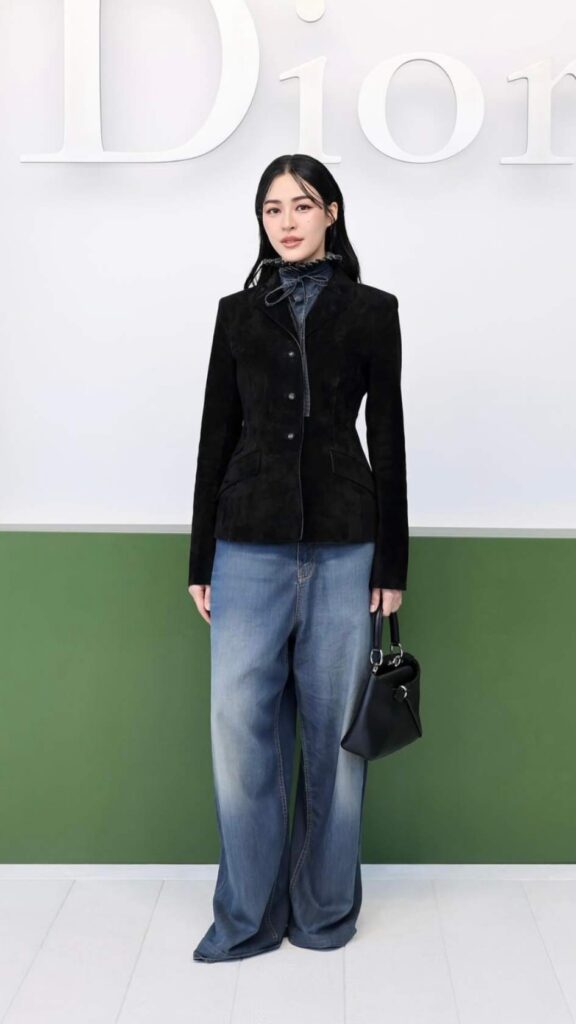
Yet the looks never feel flat. Texture plays a critical role in maintaining depth within her restrained styling approach. Elements such as Dior’s iconic Macrocannage pattern, distressed fabric layering, polished hardware detailing, and structured leather accessories introduce dimension without disrupting the overall visual calm. The result is styling that feels sophisticated rather than sterile.
Her versatility within the Dior universe also deserves attention. Some appearances lean into compact rigidity, featuring sharply tailored skirts, fitted outerwear, and leather gloves that create almost sculptural silhouettes. Others embrace fluidity through tiered construction, softer movement, and vertical draping that elongates the body while preserving the same sense of composure.
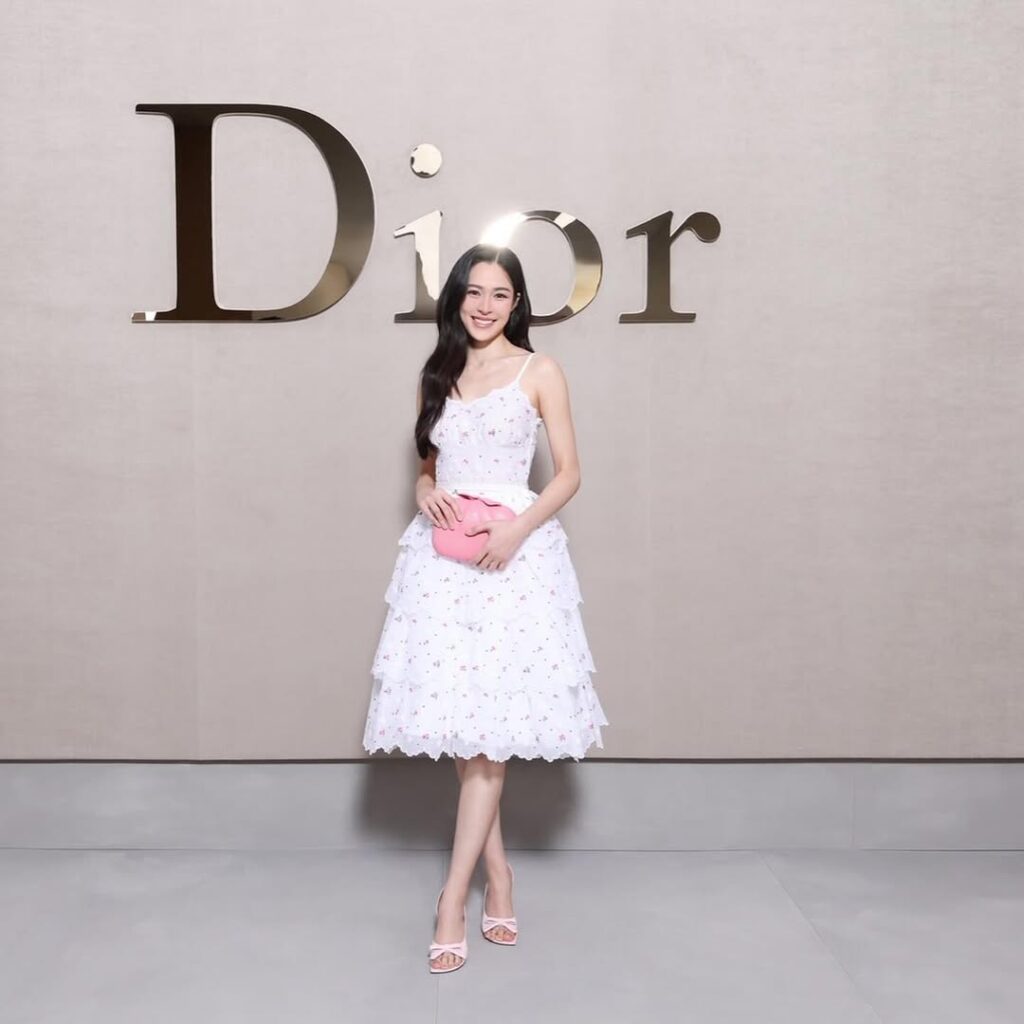
That balance between rigidity and softness has become central to her style identity. Lingling does not wear Dior as costume. Instead, she interprets the house through a lens of refined maturity, where elegance is expressed through control rather than extravagance.
In many ways, her fashion trajectory reflects a larger luxury movement currently reshaping celebrity dressing. The new aspirational image is no longer maximalist glamour. It is precision. It is tailoring. It is quiet authority communicated through silhouette and texture.
And within that conversation, Lingling Kwong is steadily positioning herself as one of Dior’s most visually coherent modern muses.