Insights
Louis Vuitton Surfer-Dandy Collection Signals Fashion’s Shift Away From Traditional Summer Dressing
For decades, spring/summer menswear has followed a predictable formula: lighter fabrics, relaxed tailoring, and a gradual move away from structured dressing. At Louis Vuitton Spring-Summer 2027 during Paris Mens Fashion Week, Pharrell Williams challenged that convention entirely.
Presented on one of the season’s most ambitious runway constructions, the collection transformed the familiar image of the luxury businessman into something altogether different, a “Surfer-Dandy” navigating between corporate formality and coastal freedom. Rather than abandoning tailoring, Pharrell placed it in direct conversation with surf culture, creating one of the most commercially relevant menswear narratives to emerge from Paris Fashion Week.
The collection’s strongest message was the rise of what could be described as “Corporate Surf” dressing.
Traditional menswear staples including structured suits, ties, trench coats, and overcoats appeared alongside beach-inspired styling cues. The resulting tension between boardroom precision and seaside ease reflected a broader shift in luxury fashion, where consumers increasingly seek versatility rather than rigid dress codes. More surprising was the collection’s fabric direction.
While spring/summer collections traditionally lean heavily on cottons and linens, Louis Vuitton embraced substantial textures. Structured leather outerwear, wool knitwear, and corduroy introduced a weight and richness rarely associated with warm-weather dressing. The move suggests that seasonal fashion categories are becoming less relevant as luxury consumers prioritize year-round wardrobe investment pieces over strictly seasonal purchases.The collection also elevated technical beachwear into luxury territory.
Monogrammed wetsuits, diving-inspired garments, and marine utility references appeared throughout the runway. Hardware details, particularly chains featuring crab-claw-inspired karabiners, reinforced the nautical narrative without reducing it to costume. These elements demonstrated how performance and leisure categories continue to influence luxury fashion’s design language.Elsewhere, embellishment played a critical role in developing the collection’s storytelling.
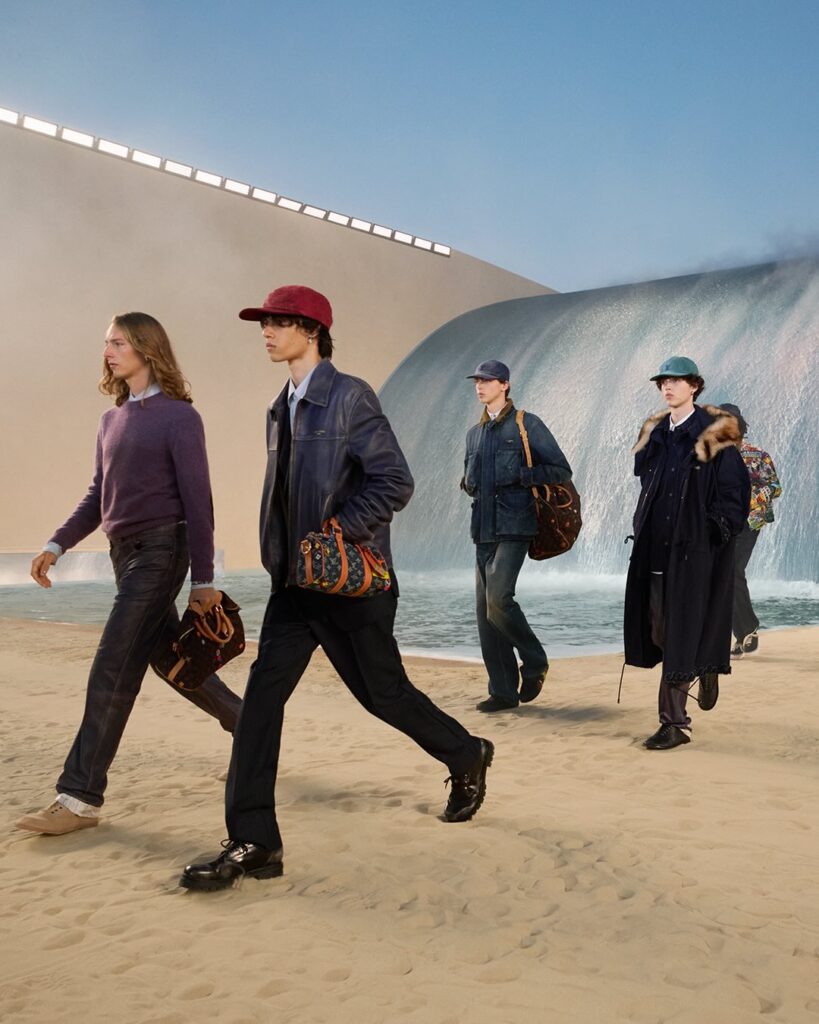
Travel badge-adorned jackets, palm tree embroidery, shell-detailed denim, and vibrant leather outerwear introduced a sense of movement and discovery. Rather than relying on logos alone, the collection used surface decoration to build character and narrative into individual garments. The colour story supported this approach through restraint rather than excess.
Off-whites, warm beiges, slate greys, sky blues, pastel greens, and red ochre tones created a palette that felt connected to coastlines and natural landscapes rather than the hyper-saturated tropical references often associated with resort fashion. Strategic uses of black provided contrast and sophistication, grounding the collection’s more playful elements.Yet perhaps the most important takeaway was not a garment at all.
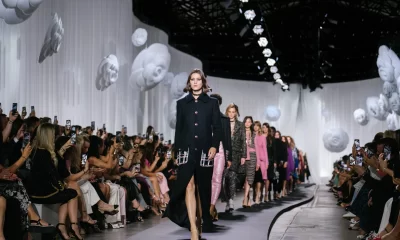
The collection’s runway construction became a visual extension of the clothes themselves, reinforcing Louis Vuitton’s ongoing strategy of transforming fashion shows into cultural experiences. Increasingly, luxury houses are competing not only through product design but through world-building, creating immersive environments that communicate a complete lifestyle narrative.
For designers and brands watching the season closely, Louis Vuitton Spring-Summer 2027 offers a clear signal. The future of menswear may not lie in choosing between tailoring and casualwear, performance and luxury, city and coast. Instead, it lies in merging these seemingly opposing worlds into a new category of dressing that reflects how consumers actually live.
The Surfer-Dandy may have begun as a runway concept, but its influence is likely to ripple far beyond Paris.