Insights
FH Insights: Wuxi Fashion Week Signals China’s Strategic Lead While India Remains Structurally Stalled
The latest edition of Wuxi Fashion Week is not just another international showcase. It is a signal. A sharp, well-executed indicator that China is no longer positioning itself as a manufacturing powerhouse alone, but as a cultural and narrative authority in global fashion.

Set within Nianhua Bay, the event demonstrated something India’s fashion ecosystem continues to struggle with, the ability to integrate heritage, environment, and modern design into a unified, exportable narrative.
And that gap is widening.
China’s Shift: From Production Hub to Narrative Powerhouse
For years, China’s role in fashion was largely industrial. That phase is now over.What Wuxi showcased is a matured ecosystem where government-backed cultural infrastructure, global platforms, and domestic brands operate in sync. The runway was not treated as a temporary installation but as a cultural stage, embedded within a destination that already carries historical and aesthetic value. This is strategic.
By placing fashion within an experiential environment, China is aligning itself with how luxury consumption is evolving globally. Consumers are no longer satisfied with products alone. They seek immersion, context, and story.
India, despite having deeper craft heritage, continues to isolate fashion within transactional formats, hotel ballrooms, closed guest lists, and fragmented storytelling.
The Power of Integrated Showcasing
The Wuxi Edition brought together brands like LI-NING, CHENPENG, and JIWENBO alongside international designers and streetwear labels.
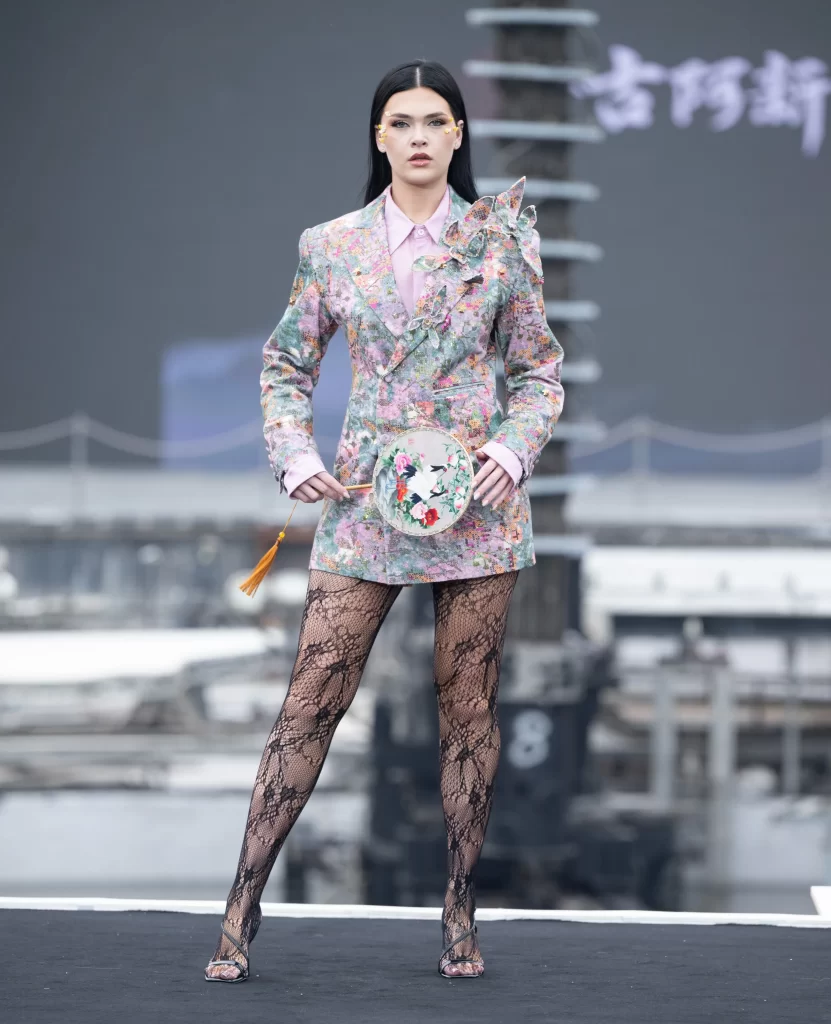
This is not accidental curation. It reflects a clear understanding of the modern fashion market, where luxury, streetwear, and emerging design operate within the same cultural ecosystem.
India, in contrast, still operates in silos.
Luxury designers, streetwear brands, and craft clusters rarely share platforms in a way that builds a unified national fashion identity. The result is fragmented visibility, where no single narrative gains enough strength to compete globally.
“China Cool” vs India’s Underleveraged Heritage
One of the most critical takeaways from Wuxi is how China is repackaging its heritage.
Techniques like Miao embroidery and Su embroidery are not being preserved quietly. They are being actively repositioned within contemporary fashion, giving rise to what can be described as “China Cool”, a globally consumable aesthetic rooted in authenticity.
India has a far richer craft vocabulary, from Chikankari to Kanchipuram, from Bandhani to Zardozi. Yet, its positioning remains inconsistent.The issue is not lack of heritage. It is lack of narrative control.
Indian fashion often presents craft as either traditional or occasion-based, rarely as a forward-looking luxury language. China, on the other hand, is embedding heritage within modern silhouettes, making it relevant to both domestic and international consumers.
Education, Infrastructure, and Long-Term Thinking
Another area where Wuxi outperforms is ecosystem integration.
By featuring award-winning students and academic institutions alongside established designers, the event creates a pipeline. Talent is not discovered randomly, it is systematically developed, showcased, and absorbed into the industry.
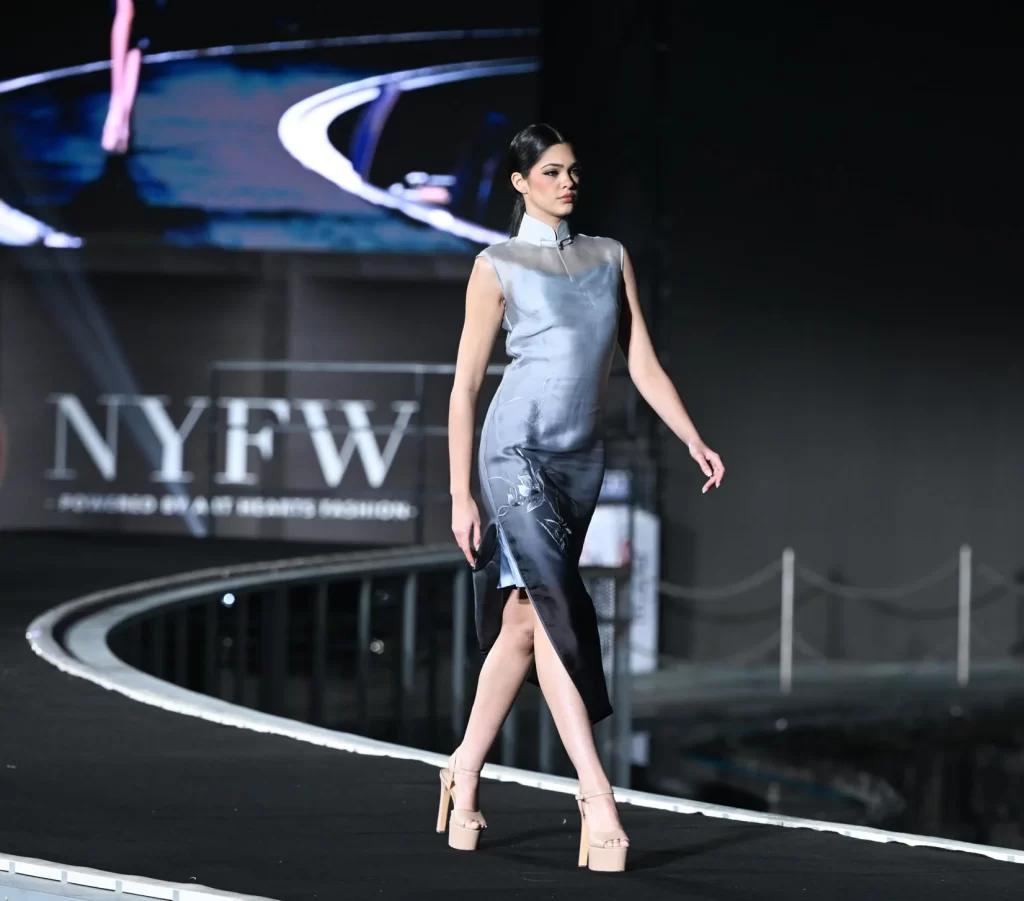
India’s fashion education ecosystem exists, but its connection to large-scale platforms remains weak. Graduates often operate in isolation, without structured pathways into visibility or industry integration.
This is where momentum is lost.
Experience-Led Fashion vs Event-Led Fashion
Wuxi’s biggest advantage lies in how it treats fashion as an experience.The use of Nianhua Bay as a living, breathing backdrop transforms the runway into a narrative environment. Architecture, landscape, and design work together to create a cohesive story.
India continues to treat fashion weeks as events rather than experiences.Until the format evolves from “showcasing collections” to “building cultural environments”, global resonance will remain limited.
The Reality Check for India
This is not about creative capability. India has that in abundance.This is about structure, intent, and execution.
China is investing in:
- Cultural infrastructure that supports fashion
- Integrated platforms that merge global and domestic voices
- Strategic storytelling that makes heritage aspirational
- Education pipelines that feed directly into industry
India, meanwhile, is still navigating:
- Fragmented platforms
- Inconsistent global positioning
- Under-leveraged craft narratives
- Limited alignment between education and industry
The Strategic Takeaway
Wuxi Fashion Week is not just a successful event. It is a blueprint.It shows how a country can transition from being part of the fashion supply chain to owning a position within the fashion conversation.
For India, the implication is clear.If the ecosystem continues to operate in silos, the gap will not just remain, it will accelerate.Because while India debates identity, China is already executing it.
And in fashion, execution always wins.