Insights
Fastest Growing Fashion Careers, And Why the Industry Is Hiring Differently
Fashion is ever changing and the fashion industry is undergoing one of its biggest employment shifts in decades. While fashion design continues to attract thousands of graduates every year, the industry’s hiring priorities are quietly moving elsewhere.
Design is no longer the only engine of fashion. Digital commerce, luxury branding, sustainability, fashion technology and content-driven retail have created entirely new career paths that barely existed a decade ago. The result is a workforce that increasingly values specialised skills over traditional job titles.
For students, professionals and even educational institutions, understanding this transition has become essential.
The Designer Is No Longer Working Alone
There was a time when collections moved from sketchbook to runway through relatively straightforward processes. Today, every successful collection is supported by specialists who interpret consumer behaviour, optimise online merchandising, manage digital storytelling, analyse retail data and coordinate production across global supply chains.
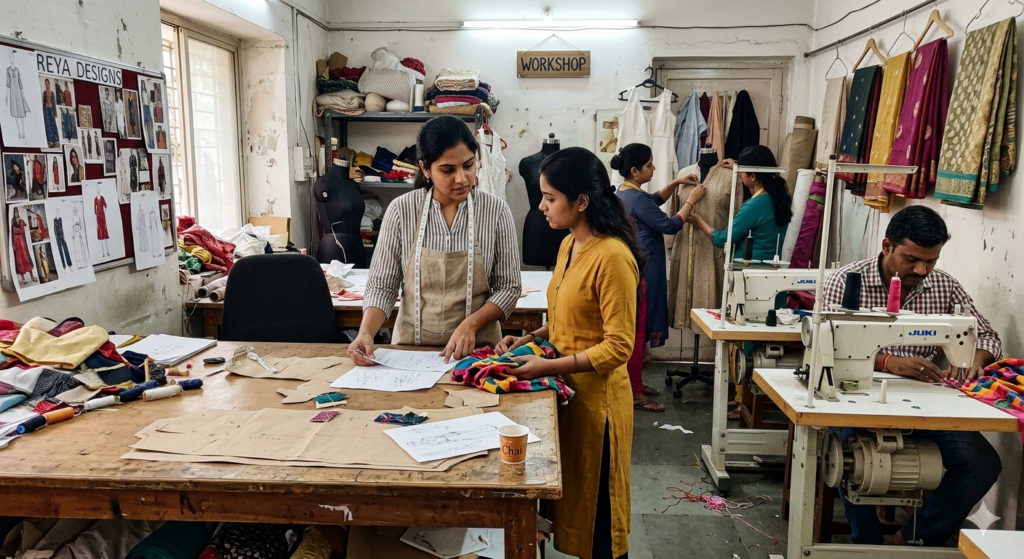
Fashion has become multidisciplinary. A modern luxury label may hire fewer designers than expected while simultaneously expanding teams dedicated to content production, digital merchandising, customer experience, sustainability compliance and brand partnerships.The industry’s growth is no longer measured only by garments produced, but by experiences created.
The Careers Growing the Fastest
Digital Merchandising
As brands compete online, product presentation has become a commercial science rather than a visual exercise.Digital merchandisers determine how products appear, how collections are organised, how customers navigate websites and how buying behaviour translates into sales.
With world’s fashion e-commerce ecosystem continuing to expand, demand for professionals in this space has accelerated rapidly.
Fashion Content Strategy
Every fashion campaign now lives across multiple platforms long before it reaches a physical store.Brands increasingly require professionals who understand editorial storytelling, social media narratives, visual communication and consumer psychology.
Fashion journalism, branded content, editorial production and content strategy are gradually becoming integral business functions rather than marketing afterthoughts.
Sustainability and Circular Fashion
Environmental reporting is no longer limited to annual CSR documents.Global sourcing regulations, responsible manufacturing and consumer expectations have created demand for specialists who understand sustainable textiles, supply chain transparency, lifecycle assessment and ethical production systems.
As international buyers place greater emphasis on compliance, sustainability professionals are becoming valuable commercial assets.
Fashion Data Analytics
Every online purchase generates information.Brands now analyse customer journeys, return patterns, pricing behaviour and inventory movement using sophisticated analytical tools.Professionals capable of converting data into commercial decisions are increasingly influencing everything from assortment planning to product development.
Fashion Technology
Artificial intelligence, virtual sampling, 3D garment development, digital twins and automated production planning are beginning to reshape fashion operations.While creative judgement remains essential, technology is becoming equally valuable.
Fashion professionals who understand both design and digital systems will likely enjoy significant advantages over the coming decade.
Fashion Communication and Luxury Branding
Luxury consumers no longer purchase products alone.They invest in stories, heritage, craftsmanship and cultural positioning.
Professionals who can build brand narratives across editorial media, events, influencer partnerships and luxury communication have become increasingly important for premium labels seeking long-term differentiation.
What This Means for Aspring Professionals
Many students still believe success depends primarily on becoming a fashion designer. The industry suggests otherwise.Fashion today rewards specialists across business, communication, technology, craftsmanship, merchandising and analytics. Creative talent remains essential, but it now operates alongside commercial intelligence and digital expertise.
Graduates who combine fashion knowledge with technical or business capabilities often find themselves better aligned with current hiring trends.
The Skills Employers Are Quietly Looking For
Recruiters increasingly value professionals who can demonstrate:
- Commercial thinking alongside creativity
- Digital literacy
- AI-assisted workflows
- Visual communication
- Consumer insight
- Cross-functional collaboration
- Data interpretation
- Adaptability across evolving technologies
Technical proficiency can often be taught.The ability to solve business problems creatively has become far more valuable.
Looking Ahead
India’s fashion industry is expected to continue expanding across luxury, retail, e-commerce, exports and digital commerce over the coming years. As businesses evolve, employment opportunities will increasingly emerge in specialised roles that connect creativity with technology and commerce.For aspiring professionals, the question is no longer simply, “Do I want to become a designer?”
A more relevant question may be: “What part of the fashion business do I want to shape?” That distinction could define the next generation of fashion careers.
This article is part of Fashion Herald’s Fashion Industry Insights newsletter, examining the structural changes influencing careers, craftsmanship, retail and business across India’s fashion ecosystem.
Interested in building a stronger fashion career?
Continue the conversation through the Heritage of India Learning Community.
Through complimentary learning sessions and exclusive educational content, the Heritage of India Learning Community explores how India’s textile heritage continues to shape luxury brands, contemporary design, and the skills demanded by today’s fashion industry, bridging centuries of craftsmanship with the future of fashion.