Trends
Indian Craftsmanship Emerged as a Defining Fashion Trend at Cannes 2026
At the 79th Cannes Film Festival, Indian representation extended far beyond celebrity appearances and red carpet glamour. Cannes 2026 quietly became a powerful showcase for Indian textile heritage, with celebrities, creators, and public figures increasingly embracing regional craftsmanship, handwoven textiles, and indigenous embroidery techniques on one of fashion’s most visible global stages.

What made this shift particularly significant was the diversity of crafts being represented. Rather than relying solely on heavily embellished couture associated with Indian red carpet dressing, attendees showcased techniques rooted in regional identity, artisanal legacy, and textile storytelling.
From Chikankari and Jamdani to Bandhani, Chanderi, Ikat, and Banarasi weaving, Indian craft emerged not as costume dressing, but as contemporary luxury fashion language.
Indian Textiles Became the Real Statement on the Cannes Red Carpet
One of the strongest trends visible across Indian Cannes appearances this year was the movement toward craft-first styling.
Seema Singh embraced intricate craftsmanship in a heavily embroidered look featuring traditional Chikankari embroidery alongside detailed Jharoka-inspired motifs. The outfit reflected the growing luxury focus on surface artistry and heritage detailing rather than overt embellishment alone.

Similarly, Huma Qureshi chose a Banarasi saree for Cannes 2026, reinforcing how handwoven Indian textiles continue evolving within global red carpet dressing. Banarasi weaving, historically associated with ceremonial and bridal fashion, increasingly appears today within contemporary celebrity styling as global fashion moves toward authenticity and craft preservation.
Meanwhile, Bengali content creator Niranjan Mondal brought attention to eastern Indian textile traditions through an ensemble by Vare featuring intricate Kantha embroidery layered over Jamdani weaving. The look highlighted how storytelling through textile layering is becoming increasingly important in modern Indian fashion representation internationally.
Regional Indian Crafts Are Becoming Global Luxury Narratives
Another defining aspect of Cannes 2026 was the regional diversity within India’s fashion representation.
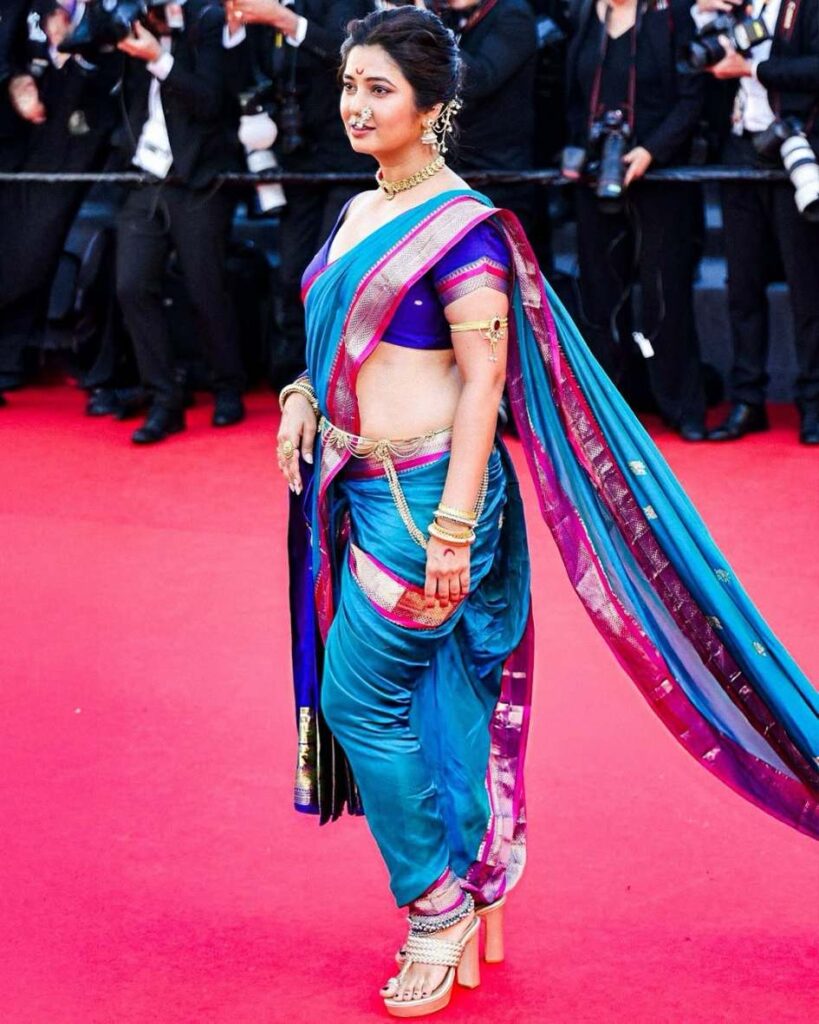
Prajakta Mali wore a Maharashtrian Peshwai silk saree by Manish Malhotra, bringing attention to Maharashtra’s royal textile heritage through a more structured and regal silhouette. The appearance reflected luxury fashion’s growing interest in culturally rooted dressing with strong historical references.
At the same time, Ishita Mangal embraced Bandhani craftsmanship through a saree that celebrated traditional tie-dye artistry in a contemporary Cannes setting. Bandhani, once primarily associated with festive and regional dressing, continues gaining renewed visibility through younger fashion voices redefining India’s occasionwear globally.
Alia Bhatt also contributed to the craft-focused narrative through a Chanderi dhoti skirt silhouette, blending heritage textile tradition with modern draped construction. The fusion reflected how Indian designers are increasingly repositioning crafts not as archival nostalgia, but as adaptable luxury design elements.
Meanwhile, Diana Penty wore an Ikat-inspired gown, translating traditional woven pattern language into a contemporary red carpet format, further proving that India’s craft aesthetics are moving fluidly beyond conventional ethnic silhouettes.

Cannes 2026 Showed That Indian Fashion Is Shifting From Couture Display to Cultural Storytelling
For years, Indian Cannes fashion was often dominated by high-glamour couture moments designed primarily for visual impact. Cannes 2026 felt different.
This year’s strongest Indian fashion narratives were rooted in identity, regional heritage, textile preservation, and craftsmanship visibility. The focus shifted from wearing “Indian-inspired fashion” to directly spotlighting India’s artisanal techniques themselves.
That transition mirrors a larger global luxury movement. Across international fashion, consumers and brands are increasingly valuing authenticity, handmade craftsmanship, cultural specificity, and traceable artistry over mass-produced visual spectacle.
Indian fashion, with its deep textile ecosystem and centuries-old craft traditions, naturally fits into that shift.
What Cannes 2026 ultimately demonstrated is that Indian craftsmanship is no longer being positioned as occasional cultural representation on global carpets.It is increasingly becoming part of the international luxury conversation itself.