Trends
Burberry’s Activewear Move Signals Luxury Fashion’s Next Battleground
For years, luxury fashion treated activewear as a side category, commercially useful perhaps, but culturally secondary to tailoring, leather goods or runway spectacle. That hierarchy no longer exists. Burberry’s launch into activewear is not simply a product expansion, it is another signal that performance-driven dressing has officially become central to the modern luxury wardrobe. What makes the move particularly notable is timing.

Burberry’s recent recovery strategy has largely depended on returning to what the house historically owns best: outerwear, British identity and recognisable heritage codes. In an industry increasingly addicted to reinvention, Burberry instead chose recalibration. Scarves, trench coats and classic house signatures became stabilising assets rather than outdated symbols.
The introduction of Burberry’s Activewear therefore marks an interesting strategic shift. The brand is stepping into a category that sits outside its traditional luxury authority, while still attempting to anchor the move within heritage storytelling. That balance matters.
Luxury consumers today are increasingly suspicious of opportunistic category expansion. Fashion houses can no longer enter wellness, sport or performance sectors purely because they are trending. The product must still feel connected to brand DNA. Burberry appears aware of this risk, positioning the collection through its historical links to outdoor and sportswear rather than presenting it as a sudden pivot into gym culture.The distinction is subtle but commercially important.
This is not activewear designed around elite athletic performance. It is activewear designed around lifestyle identity. The collection’s lightweight jackets, leggings, jogging pants and training layers exist less as technical equipment and more as extensions of luxury casualwear. Breathable fabrics and lightweight construction matter, but so do recognisable codes like the Burberry Check and the reflective Knight emblem. Function alone is not the selling point. Visibility is.That reflects the broader evolution of the athleisure market itself.
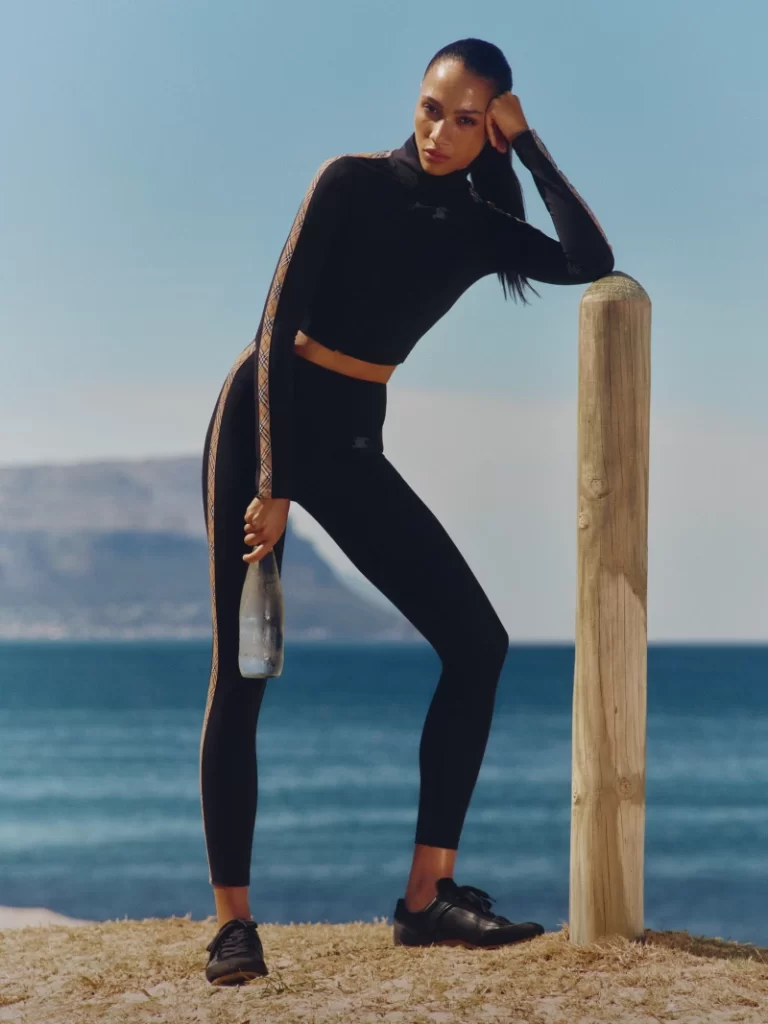
The modern luxury consumer rarely separates performance dressing from everyday dressing anymore. Activewear is no longer confined to workouts; it now occupies airports, luxury cafés, creative offices and weekend social spaces. The category succeeded because it aligned with how consumers actually live, prioritising mobility, comfort and versatility without sacrificing status signalling. This is precisely why nearly every luxury house is now navigating the same territory.
The post-pandemic wardrobe permanently altered fashion consumption patterns. Consumers became more selective about pieces that feel restrictive, overly ceremonial or disconnected from daily life. Tailoring remains aspirational, but comfort became non-negotiable. Activewear brands capitalised on that behavioural shift first, while luxury fashion initially underestimated it.Now the industry is adapting.
Burberry’s entry also highlights another important transformation within luxury fashion: performance aesthetics are replacing overt glamour as a modern symbol of wealth. Technical fabrics, minimalist sports silhouettes and elevated essentials increasingly communicate affluence more effectively than heavily embellished occasionwear. Luxury today often signals itself through understatement and functionality rather than visual excess.
This explains why even Burberry’s recent swimwear collaboration with Hunza G leaned heavily into material innovation and adaptable design language rather than traditional resort glamour. The consumer appetite is shifting toward pieces that integrate seamlessly into lifestyle routines instead of existing solely for fashion moments.Still, entering activewear is not without risk.
The category is already crowded with dominant players that possess far stronger technical credibility. Burberry is not competing only against luxury rivals; it is entering a landscape shaped by performance specialists, athleisure giants and culturally entrenched sportswear labels. In that environment, branding alone is no longer enough.
The challenge for Burberry will be maintaining luxury desirability while proving relevance in a category where consumers increasingly expect both aesthetic value and genuine functionality.
But strategically, the move makes sense.
Activewear is no longer an adjacent market. It is one of the few sectors where luxury, wellness, travel and lifestyle culture intersect at scale. For Burberry, whose revival depends on rebuilding consistent consumer engagement rather than chasing seasonal virality, the category offers something especially valuable: repeat wearability.
A trench coat may define the house historically. But activewear defines how consumers move through modern life.
And luxury fashion has finally realised that daily relevance is becoming just as important as heritage prestige.