Insights
Inside Vancouver Fashion Week: Heritage, Power Dressing, and Structured Rebellion Redefine the Runway
At Vancouver Fashion Week, the latest season marked a clear departure from trend-chasing spectacle toward something more deliberate. The runway focused on heritage-driven craftsmanship, architectural silhouettes, and controlled provocation, positioning Vancouver as a platform for globally diverse design narratives.
Across collections, a unifying direction emerged: fashion is becoming more intentional, structured, and culturally anchored. Three standout showcases—Manuel Juárez, Nathalie Ravaoary, and Ay Lelum—captured this shift through distinct yet interconnected trend movements.
Structured Rebellion and the New Power Dressing
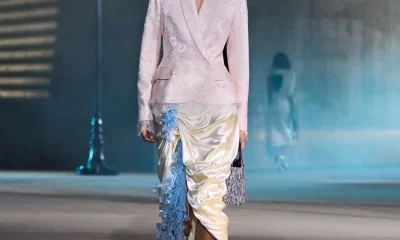
Manuel Juárez’s runway introduced a sharp evolution in eveningwear through what can be defined as Structured Rebellion. The key silhouette centered on a tension between control and exposure.
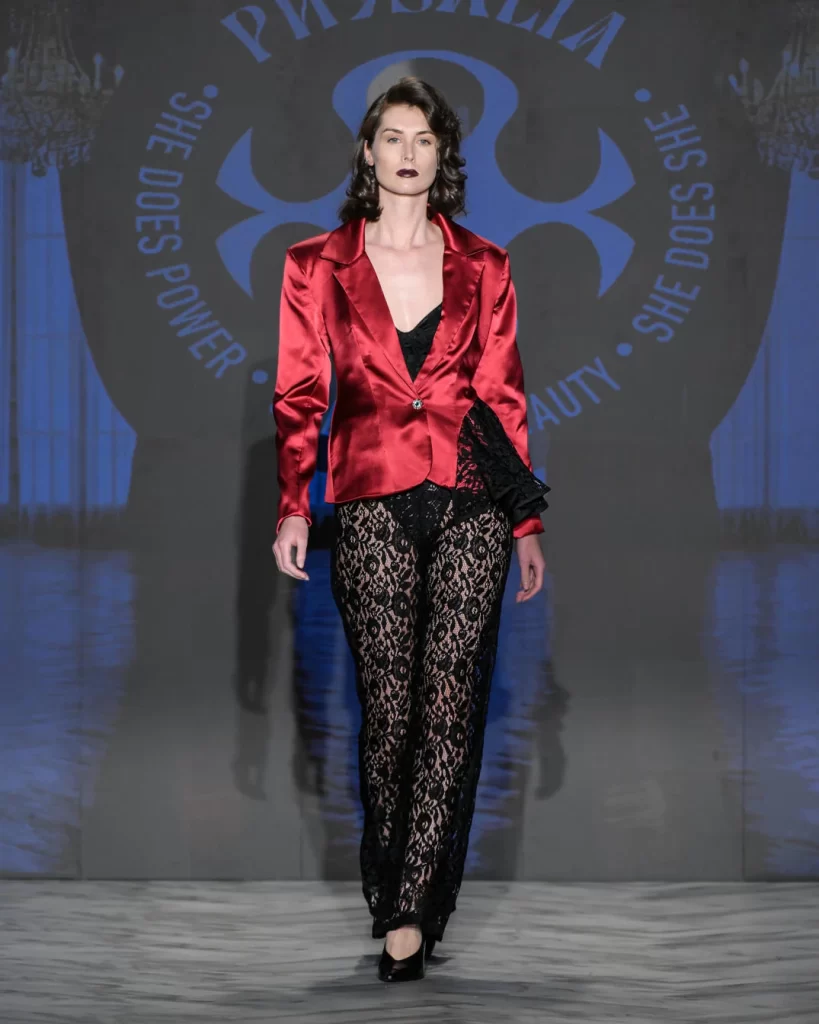
A sharply tailored, high-gloss satin blazer—cut to emphasize shoulders and waist—was paired with sheer floral lace trousers, creating a striking contrast between rigidity and transparency. An asymmetrical lace peplum connected the two, blurring the line between tailoring and lingerie.
This juxtaposition signals a shift toward aggressive femininity, where power dressing is no longer about concealment but controlled revelation. The traditional codes of suiting are being deconstructed, replaced by silhouettes that combine authority with vulnerability.
Trend Direction
Modern suiting is evolving into hybrid forms, structured outer layers paired with sheer, expressive underlayers.
Architectural Dark Romance
Nathalie Ravaoary’s presentation introduced a darker, more sculptural direction for eveningwear,best described as Architectural Dark Romance.
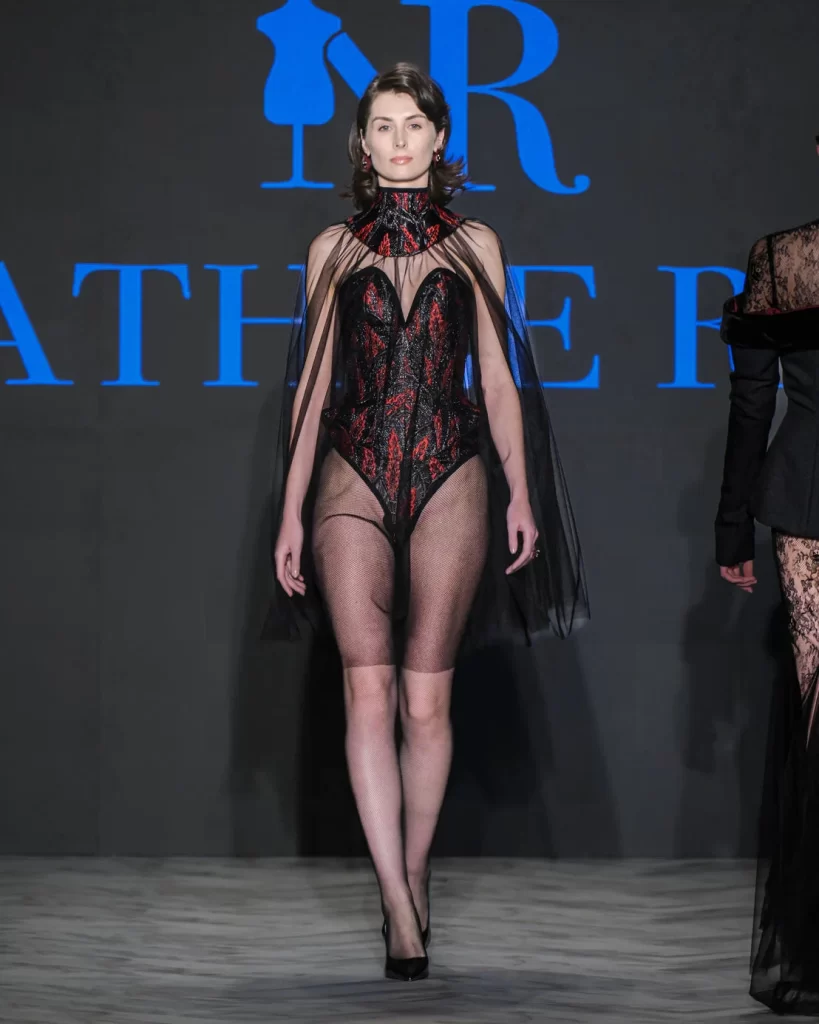
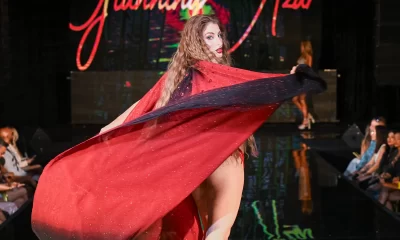
The defining look featured a high-neck corset bodysuit constructed with armor-like precision. Rigid structure, enhanced with red-on-black metallic detailing, formed the core silhouette. This was contrasted with a sheer flowing cape, adding movement and theatricality to the otherwise controlled form.
The result was a powerful visual language rooted in extreme corsetry and vertical structure, where garments function as both armor and ornament. Fishnet textures and layered sheers further emphasized the interplay between strength and fragility.
Trend Direction
Corsetry is returning as a dominant force, reinterpreted through futuristic construction and gothic influence.
Indigenous Craft and Narrative Couture
Marking a decade on the runway, Ay Lelum presented a collection grounded in cultural storytelling and artisanal heritage.
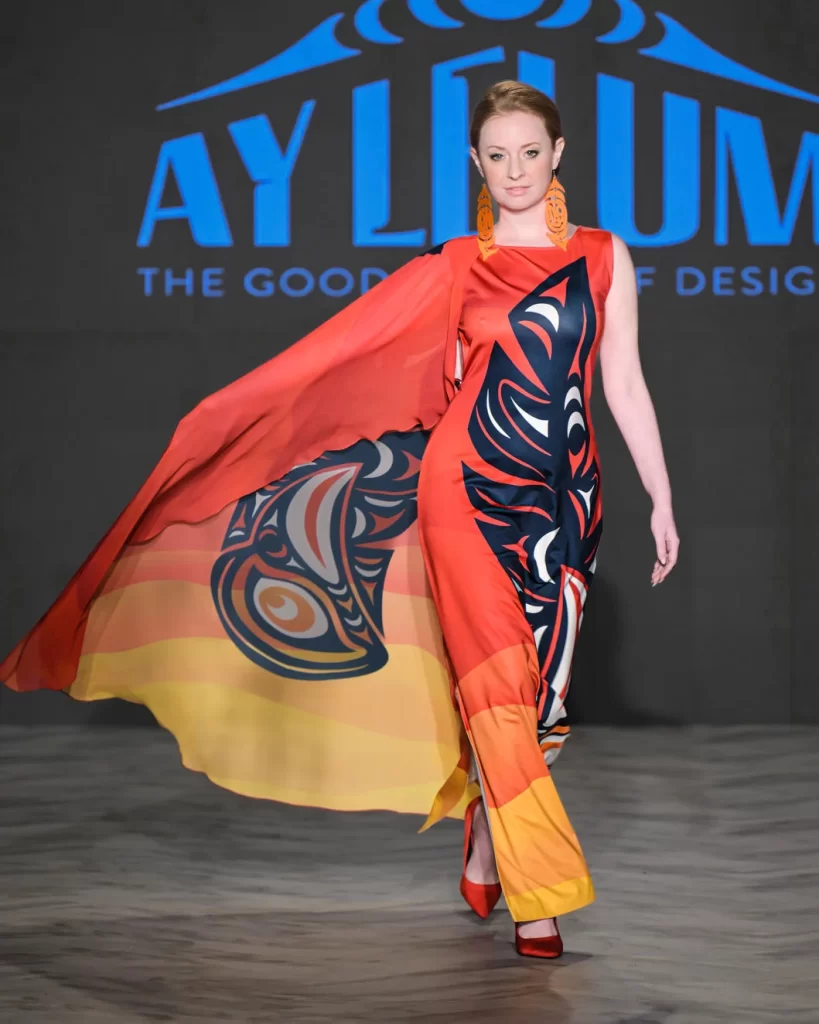
Flowing, asymmetrical silhouettes were brought to life through vibrant sunset gradients—deep reds, oranges, and yellows—while bold Coast Salish motifs moved across the garments. The designs, particularly those featuring Killer Whale and serpent imagery, transformed the pieces into narrative canvases.
Rather than adapting heritage for trend appeal, the collection demonstrated how authentic craftsmanship can drive contemporary fashion forward. The integration of indigenous art into modern silhouettes reflects a growing industry focus on cultural preservation and ethical storytelling.
Trend Direction
Narrative-driven couture and indigenous craftsmanship are becoming central to luxury fashion’s future.
The Vancouver Shift
Together, these collections highlight a broader movement emerging from Vancouver Fashion Week—one that prioritizes structure, story, and substance over surface-level trends.
From deconstructed power dressing to gothic architectural silhouettes and heritage-led design, the runway signals a recalibration of fashion’s priorities. The focus is no longer just on what garments look like, but what they represent and how they are constructed.
As global fashion continues to evolve, Vancouver Fashion Week is positioning itself as a space where cultural identity, technical precision, and modern rebellion intersect—offering a compelling alternative to traditional fashion capitals.
_______
Photography : @mikefotowerksca