Runways
Pearl Academy at Lakmē Fashion Week x FDCI: When AI Meets Intention on the First Cut Platform
At a moment when fashion is increasingly negotiating its relationship with technology, Pearl Academy’s latest showcase at Lakmē Fashion Week x Fashion Design Council of India did not attempt to provide answers. Instead, it asked a sharper question: what does creativity mean when authorship is no longer singular?
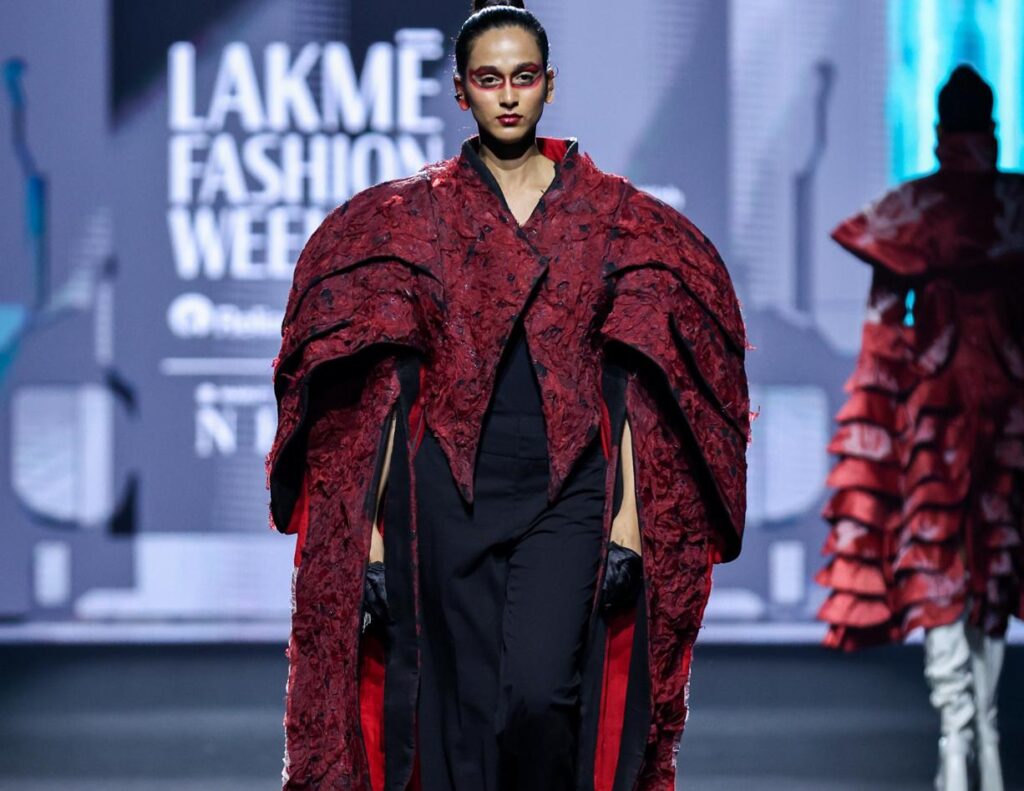
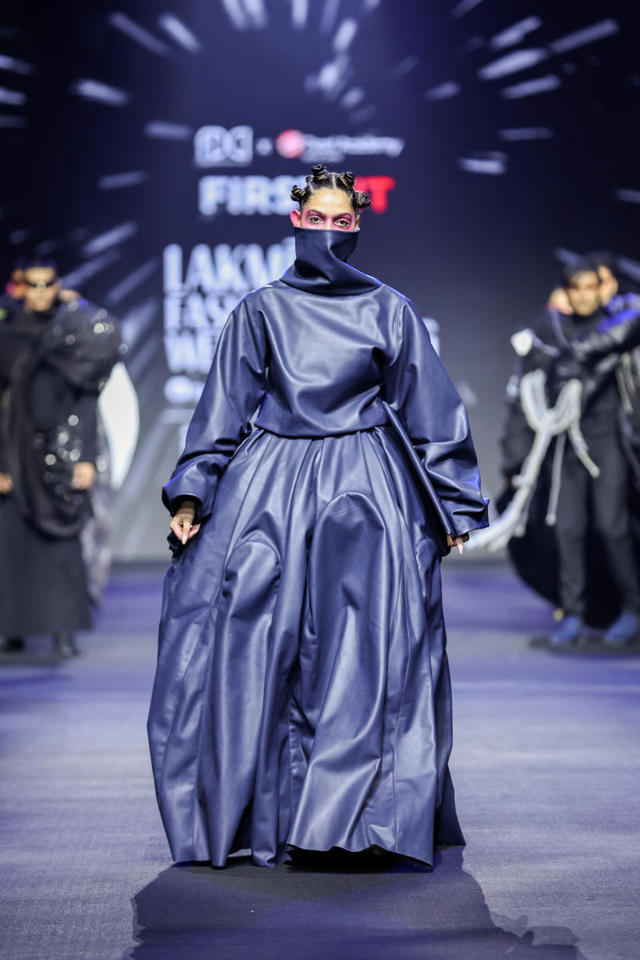
Presented under the First Cut platform, C’est Magnifique fAIntastique positioned emerging designers within a framework that felt less like a student showcase and more like a live industry provocation.
First Cut as Industry Alignment, Not Exposure
The First Cut initiative by the Fashion Design Council of India and Pearl Academy has steadily evolved into more than a visibility tool. It operates as an early-stage alignment mechanism—placing young designers within the same temporal and narrative ecosystem as established labels.
This is significant. In an industry where emerging talent often develops in isolation before entering the market, First Cut compresses that timeline. It forces designers to respond to real-time cultural and technological shifts, rather than retrospective trends.
AI as Tool, Human Intelligence as Anchor
C’est Magnifique fAIntastique built its narrative around the growing intersection of Artificial Intelligence (AI) and Human Intelligence (HI), but resisted the predictable “AI vs human” binary.
Instead, the showcase framed AI as an enabler—accelerating ideation, expanding visual possibilities, and introducing new forms of experimentation—while positioning human intelligence as the anchor of meaning. Craft, cultural memory, emotional nuance, and intention remained distinctly human territories.
This distinction matters. As AI-generated fashion imagery and design tools become more sophisticated, the industry is beginning to confront a dilution of authorship. Pearl Academy’s approach subtly reasserted that while AI can generate form, it cannot yet generate context.
Three Chapters, One Underlying Tension
The presentation unfolded in three chapters, each mapping a different dimension of “magnificence”:
- Magnificent as Mastery focused on precision and technical execution, reinforcing the continued relevance of skill in an era of automation.
- Magnificent as Meaning explored cultural and emotional depth, positioning storytelling as a counterweight to algorithmic design.
- Magnificent as Grandeur and Scale leaned into ambition, using volume and visual impact to reflect the expanded possibilities enabled by technology.
Together, these chapters did not resolve the AI–human tension—they amplified it. And that, arguably, was the point.
The Real Insight: A Generation Designing With, Not Against, AI
What emerged from the showcase was not resistance, but adaptation. These designers are not questioning whether AI should exist within fashion—they are designing with the assumption that it already does.
Sunil Sethi, Chairman of the Fashion Design Council of India, underscored this shift by highlighting how younger designers engage with a “tech-savvy audience” through instinctive, unrehearsed thinking. The implication is clear: the next generation is not burdened by legacy definitions of creativity.
For the industry, this presents both opportunity and discomfort.
Because if AI becomes embedded in the creative process, the differentiator will no longer be access to tools—but the clarity of thought behind them.
Why This Showcase Matters Now
At a time when fashion weeks globally are experimenting with digital integration—from AI-generated campaigns to virtual showrooms—Pearl Academy’s First Cut showcase offers a grounded counterpoint.
It suggests that the future of fashion will not be defined by how advanced the technology becomes, but by how clearly designers can articulate their perspective within it.
And that’s where the real challenge lies. Not in using AI—but in ensuring that, amid its speed and scale, fashion does not lose its ability to mean something.