Mumbai
The Boy’s Club Opens Lakmé Fashion Week 2026: Rewriting the Codes of Indian Menswear
At Lakmé Fashion Week in partnership with Fashion Design Council of India, menswear is no longer playing catch-up—it’s setting the tone.
Opening the fashion week calendar on March 19, The Boy’s Club brings together a new guard of designers:- Sushant Abrol (Countrymade), Dhruv Vaish, Sahil Aneja, and Vivek Karunakaran, each pushing Indian menswear beyond its historically restrained vocabulary.
The premise is clear: the Indian male wardrobe is no longer defined by neutrality. It is being rebuilt through texture, craft, and narrative.
From Safe Staples to Experimental Surfaces
As noted by Sunil Sethi, men’s fashion has undergone a visible shift over the past decade. What was once dominated by predictable palettes and conventional tailoring has expanded into a space that accommodates bold textiles, layered surfaces, and cultural references.
Countrymade: Memory as Material
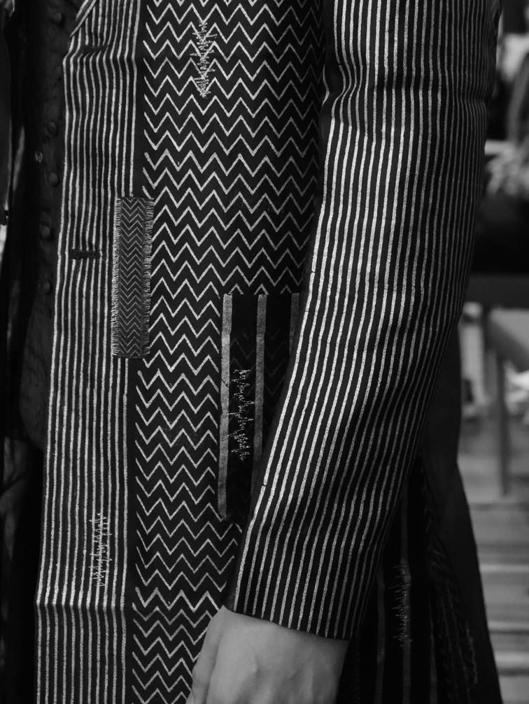
Sushant Abrol’s Cenotaph draws from memorial architecture,spaces designed to hold absence and remembrance. The collection translates this into garments through a muted, weathered palette: faded olives, scorched browns, oxidised bronze, and stark monochromes.
Techniques like mud resist printing, cold pigment dyeing, kantha, and raw-edged appliqué create surfaces that feel intentionally eroded. The garments don’t just reference history,they simulate its decay.
Dhruv Vaish: Mapping the Modern City
With The Blueprint, Dhruv Vaish shifts focus to urban systems. Streets, scaffolding, and city grids become structural references, informing seam placements and garment construction. Geometric paneling in linen, cotton denim, and printed silk mirrors temporary architectures,suggesting movement, transition, and constant rebuilding. It’s menswear as infrastructure rather than ornament.
Sahil Aneja: Terrain and Transformation
Sahil Aneja’s Strata looks to natural formations- layered rock, molten surfaces, shifting terrains. The emphasis here is on texture as narrative.Through controlled manipulation of fabric, the collection builds an interplay of light and shadow, creating garments that feel in flux. It’s less about silhouette and more about surface evolution.
Vivek Karunakaran: Gold, Reinterpreted
Vivek Karunakaran’s The Thangam offers a quieter, but equally deliberate, intervention. Drawing from South India’s long-standing relationship with gold, the collection reframes ceremonial dressing through restraint.
Raw silks, tussar, Kanjeevarams, and organza are rendered in muted golds, ecru, and earth tones, with accents of navy and teal. The approach strips away excess, positioning luxury as texture rather than embellishment.
Lakmé Fashion Week: Menswear at an Inflection Point
What The Boy’s Club ultimately underscores is a broader recalibration within Indian fashion. Menswear is no longer derivative of womenswear trends or limited to occasion dressing.Instead, it is developing its own language, rooted in material exploration, cultural referencing, and a willingness to experiment.
Opening the week with this showcase is a strategic move. It signals that the evolution of Indian fashion is not happening on the margins—it is being led, in part, by menswear.
Check out Lakme Fashion Week Schedule