Editorial
Paris Fashion Week 2026 New Materialism : Saint Laurent,Hermès,Loewe
Paris Fashion Week Fall/Winter 2026 signaled a subtle but important shift in luxury fashion. Instead of relying purely on visual spectacle, several houses focused on material innovation and fabric engineering, demonstrating how the next phase of luxury will be defined by how garments behave, move, and perform.
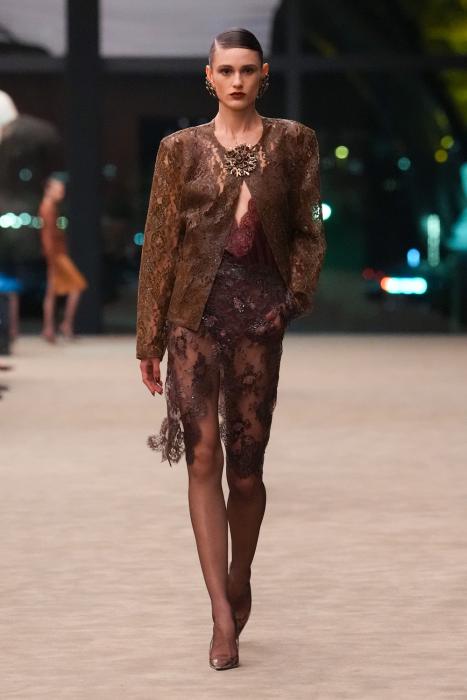
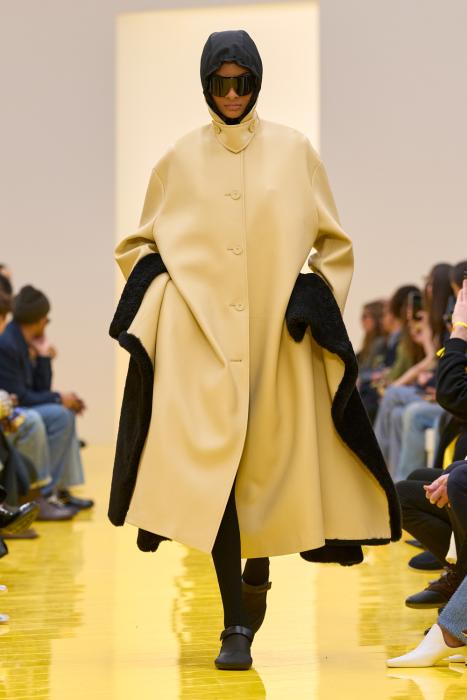
This emerging direction—what can be described as “New Materialism”—places emphasis on structural experimentation, industrial techniques, and hybrid textiles that merge couture craftsmanship with advanced material science. Three houses in particular illustrated this transition on the Paris runway: Saint Laurent, Loewe, and Hermès.
Saint Laurent: Silicone Lace and Structured Sensuality
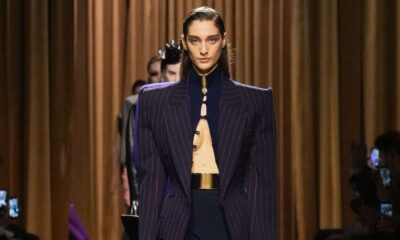
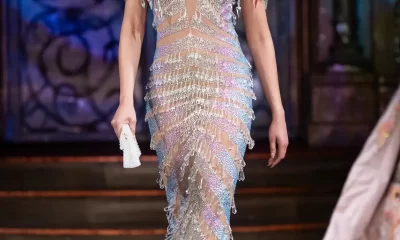
At Saint Laurent, creative director Anthony Vaccarello presented a collection that balanced sensuality with architectural precision. The technical highlight of the show was the introduction of silicone-coated lace, an innovative treatment that transformed a traditionally fragile fabric into something structurally powerful.
By infusing lace with silicone, the house created garments—particularly skirts and jackets—that retained sharp, sculptural edges instead of collapsing under their own weight. The result was lace that behaved almost like a lightweight architectural material, maintaining transparency while gaining rigidity.
This technique represents an intriguing bridge between couture delicacy and industrial strength, reinforcing Saint Laurent’s continued exploration of controlled sensuality through material experimentation.
Loewe: 3D Printing and Viscous Physicality
At Loewe, creative directors Jack McCollough and Lazaro Hernandez pushed material experimentation into more experimental territory. Their Fall/Winter 2026 collection explored what they described as the “viscous physicality” of garments, achieved through advanced fabrication methods.
One of the show’s most striking innovations involved 3D-printed liquid latex and ultra-thin leather yarn, which allowed dresses to appear molded rather than traditionally constructed. The surfaces of these garments created a fluid, almost organic silhouette that blurred the boundary between fabric and sculpture.
Outerwear also incorporated inflatable channels embedded directly into the garment structure, enabling pieces to shift volume and shape in real time. This approach introduced an element of “performative practicality,” where clothing becomes dynamic rather than static.
Loewe’s exploration highlights how digital fabrication and experimental materials are increasingly becoming part of luxury fashion’s creative toolkit.
Hermès: Fluid Leather and Technical Utility
At Hermès, creative director Nadège Vanhee approached innovation from a different perspective—refining the house’s reputation for quiet luxury through advanced material treatments.
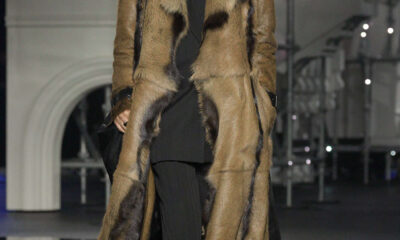
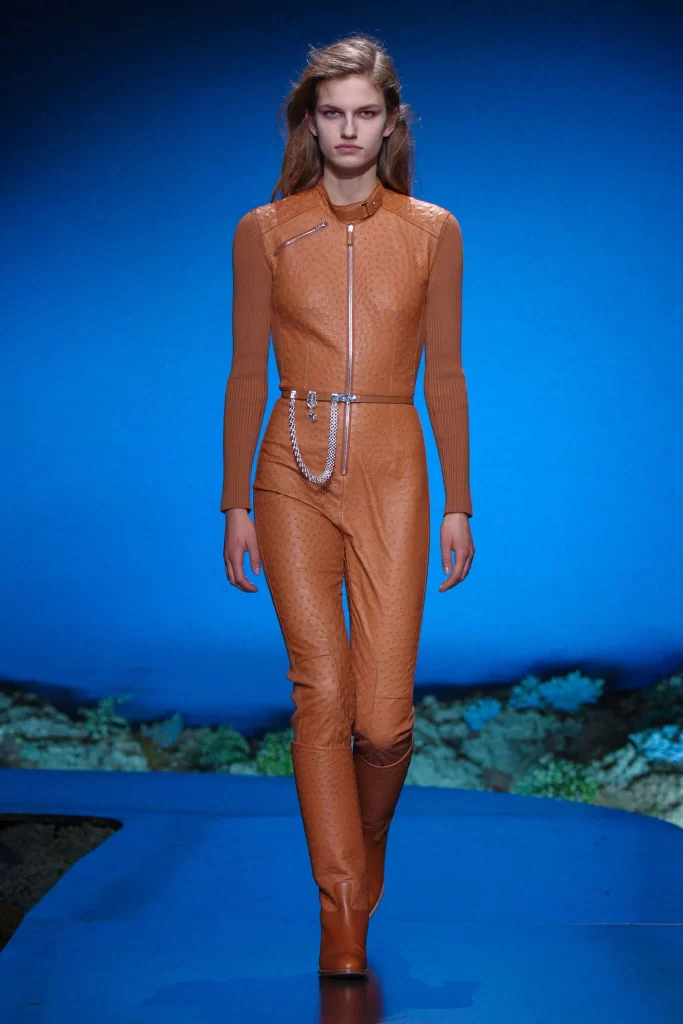
The runway featured ostrich leather jumpsuits and lambskin cycle shorts engineered to move with the softness and fluidity of silk. Through specialized tanning and finishing techniques, traditionally structured leathers were transformed into fabrics with unexpected lightness and flexibility.
Another highlight included liquid-leather bombers and tailored jackets designed to feel supple and almost fluid to the touch. These pieces demonstrate Hermès’ evolving approach to utility, where technical capability meets refined luxury.
The result is a wardrobe that balances practicality with sophistication—suggesting that modern luxury garments must perform as effectively as they impress.
The Rise of Industrial Craftsmanship
Taken together, these collections point toward a broader shift in fashion: the rise of industrial craftsmanship. Designers are increasingly combining traditional atelier techniques with technological processes such as silicone infusion, digital fabrication, and experimental leather treatments.
Rather than replacing couture, these innovations expand its possibilities. Fabrics become more durable, silhouettes more sculptural, and garments more responsive to movement.
Paris FW26 therefore suggests that the future of luxury fashion will not be defined solely by decoration or spectacle. Instead, it will be shaped by how materials evolve—transforming garments into engineered objects that merge beauty with technical intelligence.