Runways
New York Fashion Week: The Rise of Aquatic Nomadism and Net Dressing
At New York Fashion Week, runway experimentation continues to push the boundaries between craft, transparency, and sculptural movement. One of the more striking emerging directions this season can be described as Aquatic Nomadism—a trend that merges artisanal techniques with fluid, coastal-inspired silhouettes.
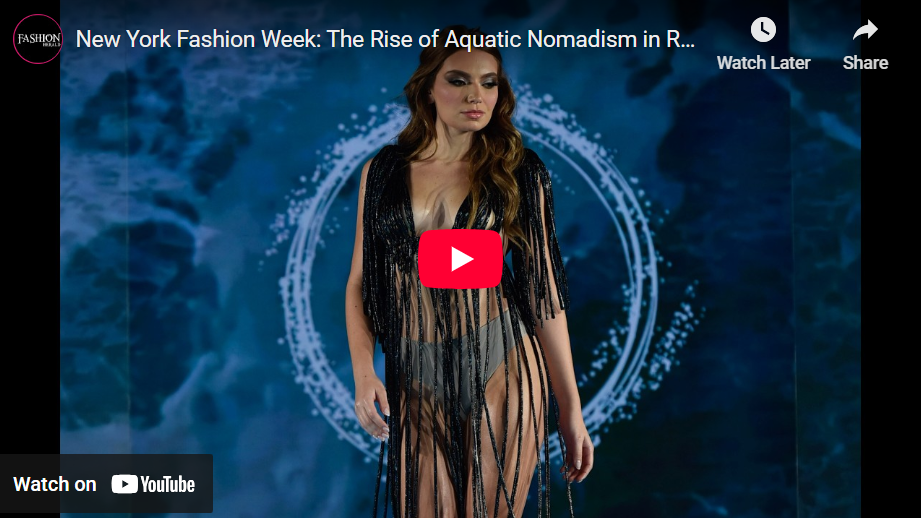
The collection explored a visual language that sits somewhere between beachwear and avant-garde eveningwear, using texture, movement, and transparency to redefine how garments interact with the body. Instead of relying on traditional fabrics, the designs leaned heavily on handcrafted structures that emphasized motion and light.
The Net Motif and Deconstructed Fabric
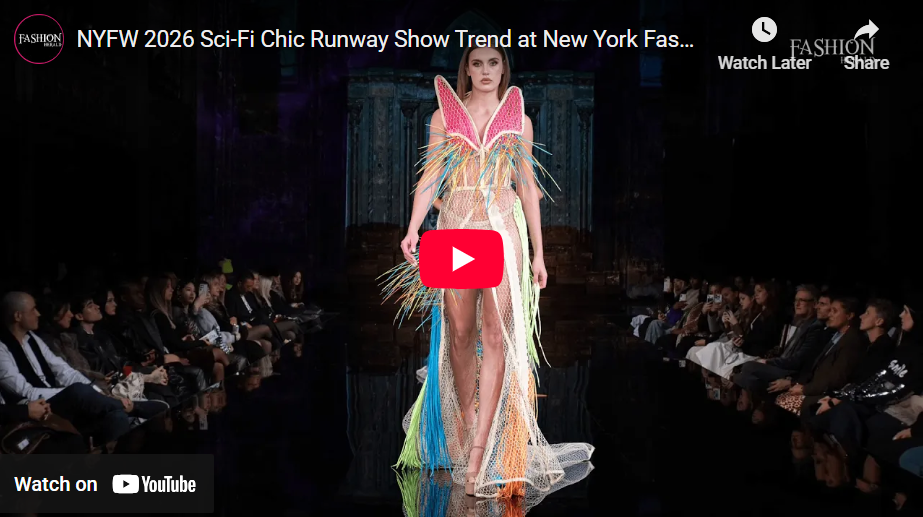
The most defining feature of the runway was the use of structural netting built from macramé, cords, and rope-like materials. Rather than acting as decorative detail, these elements formed the core construction of the garments.
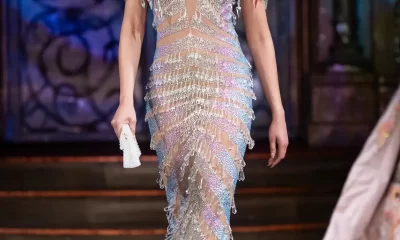
This approach created silhouettes that resembled fishing nets, woven ropes, or organic seaweed formations, giving the pieces a tactile and almost sculptural quality. The technique aligns with the ongoing evolution of the “naked dress” trend, but here transparency is interpreted through layered textures rather than sheer fabric.
By building garments from knotted structures, the runway emphasized craft-based construction, where the garment becomes a framework rather than a continuous surface.
Fringe and Kinetic Movement
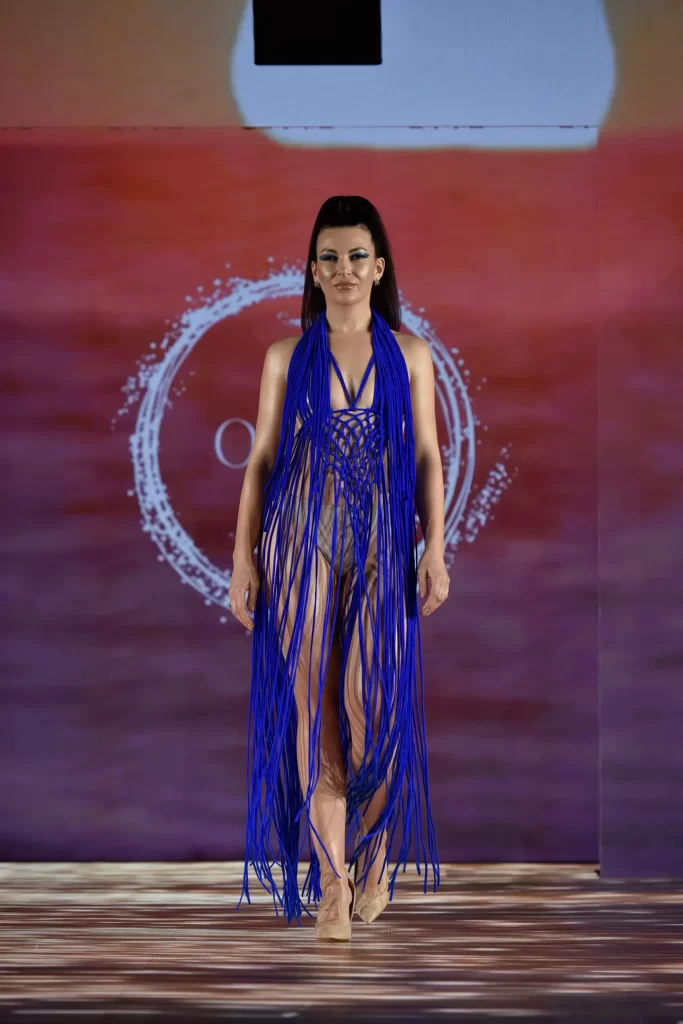
Movement played a central role in the visual impact of the collection. Floor-length fringe extended from macramé bodices and netted structures, creating garments defined by vertical motion.
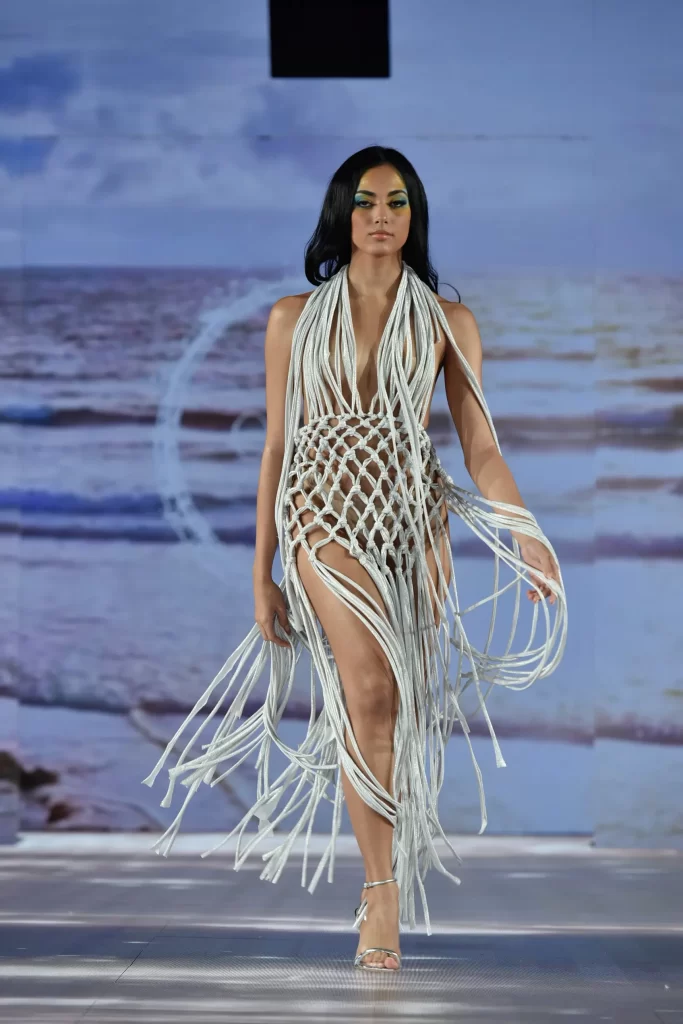
As models walked, the tassels and cords moved freely, producing a fluid, kinetic effect reminiscent of underwater currents. This dynamic quality turned the runway into a stage for motion, where garments evolved visually with each step.
The emphasis on movement-driven design reflects a broader runway shift toward garments that respond dramatically to motion rather than static presentation.
Oceanic Color Narratives
The color palette reinforced the aquatic inspiration through tones drawn directly from coastal landscapes.
Olive and moss green referenced seaweed and shoreline vegetation, while shimmering silver and white evoked the reflective surface of water and sea foam. Deep onyx and glossy black tones introduced contrast, creating what could be described as a “midnight tide” effect under runway lighting.
These natural yet dramatic colors grounded the experimental silhouettes within a cohesive visual story.
The Modern Siren Aesthetic
Styling further reinforced the collection’s conceptual narrative, leaning into what can best be described as a Modern Siren aesthetic.
Beauty looks featured iridescent blues and greens around the eyes, echoing the color shifts of ocean water. The ethereal softness of the garments was balanced with heavy platform footwear, which grounded the models and added architectural weight to the silhouettes.
This contrast between fluid fringe and structured platforms produced a powerful visual tension between delicacy and strength.
Resortwear Meets Avant-Garde
While the garments function as strong runway statements, the underlying silhouettes suggest an evolution of luxury resortwear. Many of the looks resemble elevated cover-ups or beach layering pieces, but transformed through intricate macramé construction and exaggerated proportions.
By pushing resortwear into a more experimental space, the collection challenges conventional definitions of garments—suggesting that clothing can exist as structure, movement, and texture simultaneously.
Key Trend Takeaway
The runway reflects a growing movement toward craft-driven transparency and sculptural textiles. Instead of relying on conventional tailoring, designers are increasingly exploring rope work, macramé, and fringe to create garments defined by texture and motion.
At New York Fashion Week, this Aquatic Nomadism trend signals a shift toward artisanal techniques that merge natural inspiration with avant-garde silhouettes—where the garment behaves less like fabric and more like a living structure in motion.