Runways
New York Fashion Week: How Architectural Lingerie Emerged at NYFW 2026
At New York Fashion Week, lingerie stepped decisively out of the bedroom and onto the runway as a statement of design engineering. Recent presentations revealed a bold shift away from traditional softness toward a more architectural, high-impact approach to intimate apparel.
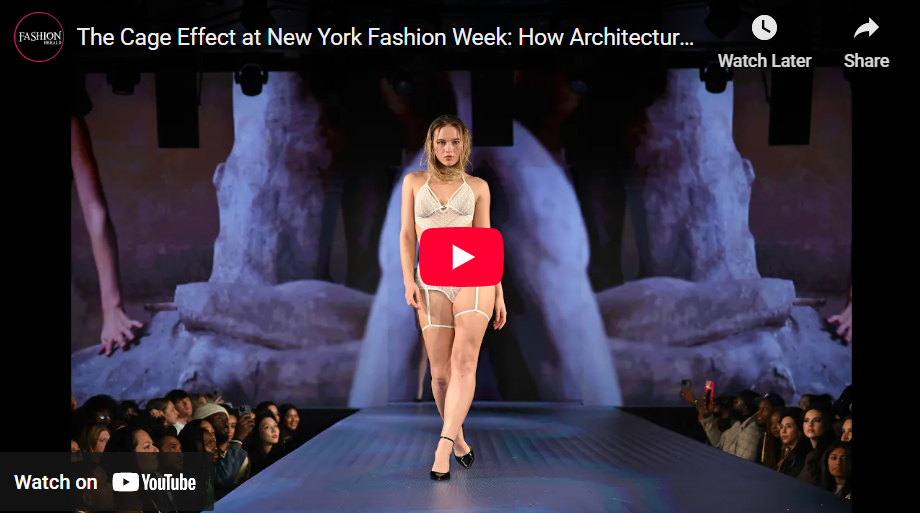
Instead of delicate two-piece sets, designers showcased intricate strap constructions, sculptural silhouettes, and gothic textures—transforming lingerie into a visible, structural component of fashion styling.
Fashion Herald identifies this emerging runway direction as “The Cage Effect,” where geometry, hardware, and negative space redefine the visual language of lingerie.
Architectural Intimacy: The Rise of Strappy Geometry
The most striking development is the rise of multi-dimensional strap construction.
Designers moved beyond conventional lingerie frameworks, creating cage-like silhouettes that wrap around the torso, hips, and thighs. These designs rely heavily on negative space, where the open gaps between straps become as visually important as the materials themselves.
The result is a geometric structure that highlights the body’s natural lines while turning intimate apparel into a sculptural runway piece.
At New York Fashion Week, this architectural approach positioned lingerie closer to avant-garde design than traditional undergarments.
Dark Romanticism and Gothic Luxe
Complementing the structural silhouettes is a darker, more dramatic aesthetic.
Runway looks leaned heavily into burgundy velvet paired with black lace, creating a rich contrast between weight and transparency. The palette—dominated by deep reds and midnight tones—reinforced a mood of gothic romanticism.
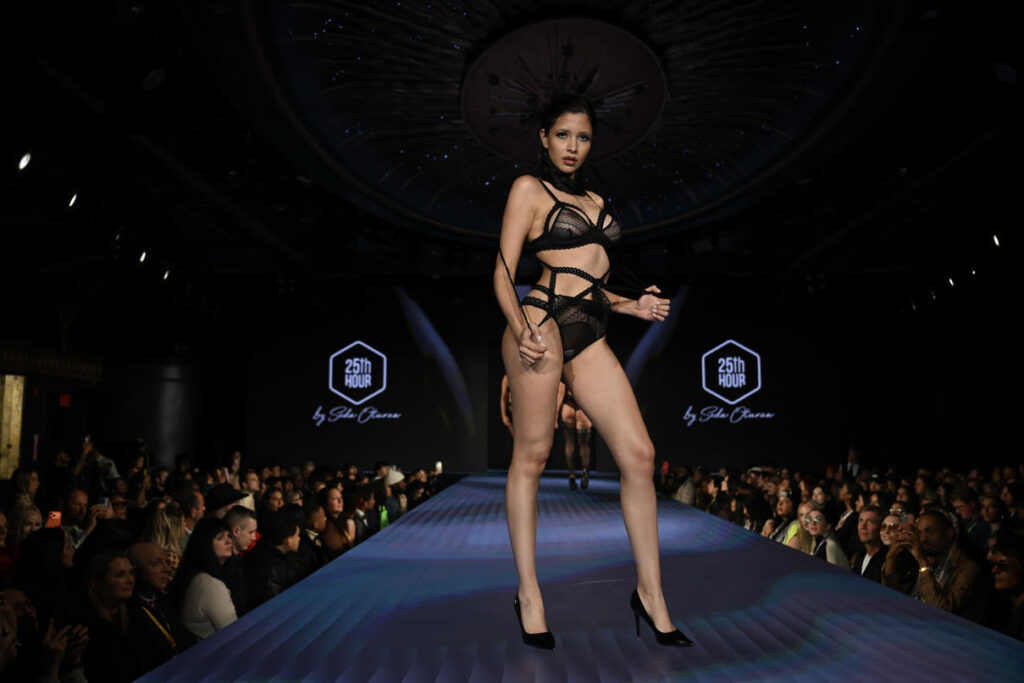
Rather than softness, the mood suggested controlled intensity—an atmosphere that aligns with the season’s broader shift toward dramatic textures and statement silhouettes.
Harness Hardware and Body Jewelry
Another defining element of the runway looks was the integration of hardware and harness-style detailing.
Chokers, garter straps, and structural bands were built directly into the garments, blurring the line between lingerie and accessory design. In many cases, the pieces functioned less like underwear and more like body jewelry, framing the torso through layered straps and metallic accents.
This crossover between lingerie and harness aesthetics reflects a growing runway appetite for garments that emphasize the body’s architecture rather than conceal it.
Elevated Hosiery and the After-Hours Mood
Styling reinforced the collection’s darker narrative.
Sheer thigh-high stockings with bold opaque bands added a graphic element to the silhouettes, balancing the intricacy of strap work with a more streamlined visual anchor. The hosiery introduced a slightly athletic edge while maintaining the sensual tone of the looks.
Beauty choices—wet-look hair, heavy eyeliner, and post-club makeup—further pushed the narrative into after-hours territory, giving the presentation a raw, nightlife-driven energy.
Tattoos as Texture on the Runway
An unexpected but compelling detail was how the garments interacted with the models’ tattoos and body art.
Rather than hiding them, the designs appeared intentionally placed to frame or mirror tattoo placements. Lace panels and strap lines often aligned with existing body art, treating tattoos almost as an additional textural layer within the look.
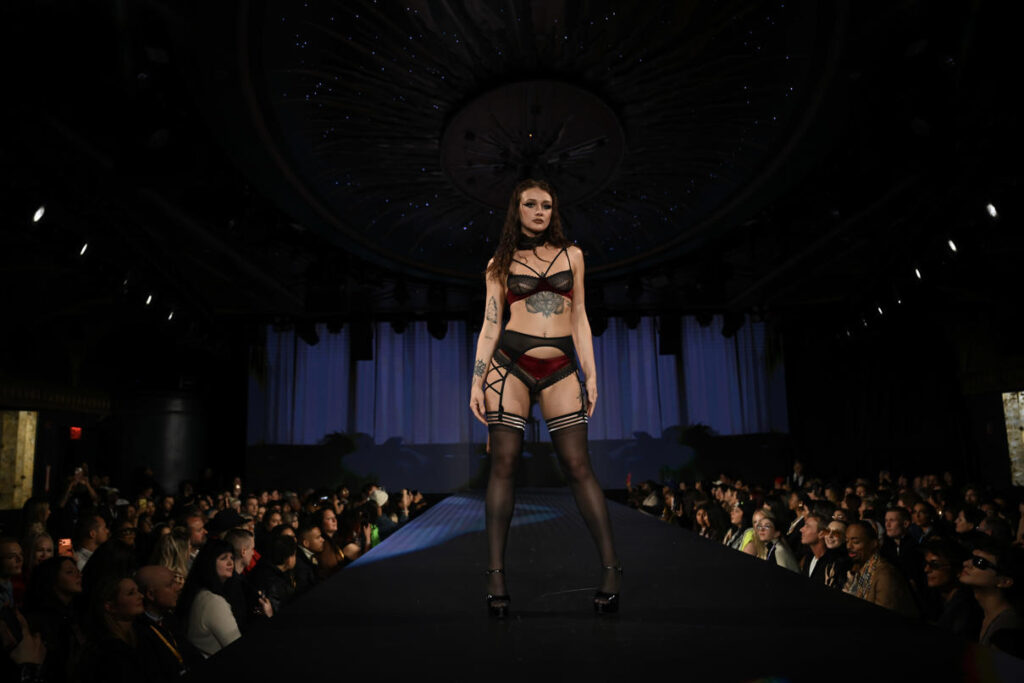
This approach highlights a growing runway philosophy: individuality is not something to be neutralized but integrated into the garment’s visual story.
Why the “Cage Effect” Matters This Season
The rise of architectural lingerie at New York Fashion Week signals a larger shift in how intimate apparel is positioned on the runway.
Instead of functioning as hidden layers, lingerie is increasingly presented as a visible design statement, styled with hosiery, harness hardware, and sculptural strap work that demands attention.
As fashion continues to explore structure, texture, and body-conscious silhouettes, the Cage Effect suggests that the future of lingerie may lie not in delicacy—but in design architecture.