Runways
Navdhara Khadi at Lakmé Fashion Week: How FDCI Designers Are Reimagining India’s Freedom Fabric
The Fashion Design Council of India (FDCI) announces Navdhara Khadi, a
special showcase by Khadi India, celebrating evolving design language of the freedom fabric at the Lakmé Fashion Week in partnership with FDCI, to be held in Mumbai from March 19 to 22.
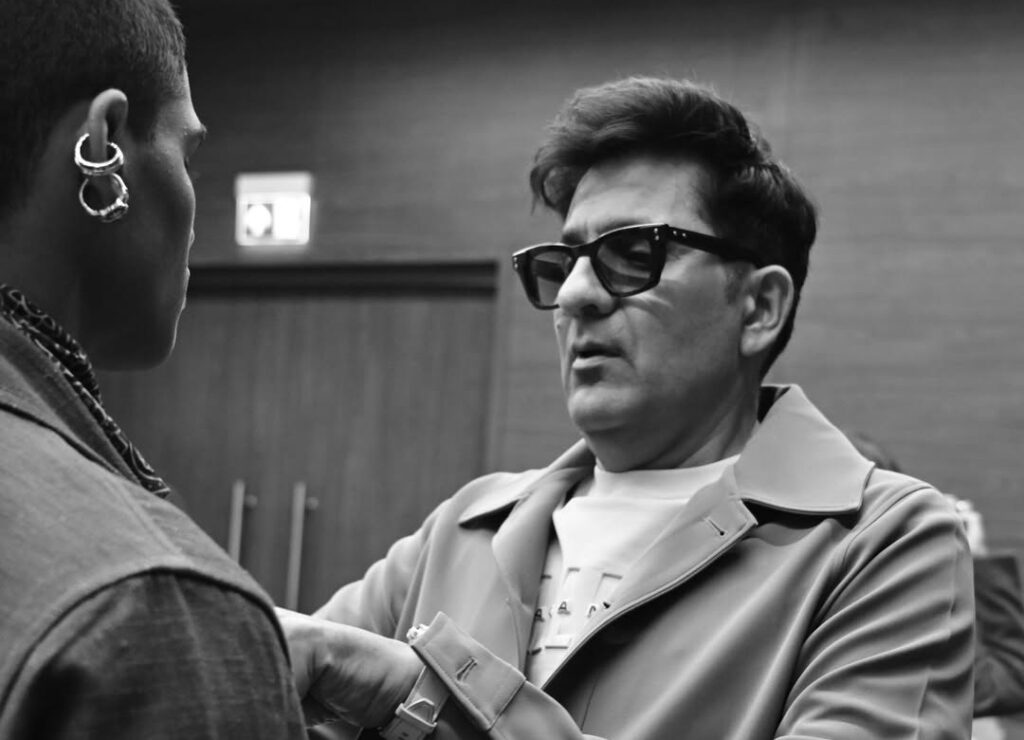
This is not Khadi as nostalgia. This is Khadi as a contested, evolving design language.
Khadi, Reframed for a New Fashion Economy
Khadi has always carried ideological weight—freedom, austerity, nationalism. What Navdhara attempts is more complex: stripping the fabric of its singular identity and placing it into multiple, sometimes contradictory, design contexts.
The intent is clear. Not preservation. Expansion.
With four distinct design voices—Samant Chauhan, Centre of Excellence for Khadi, Pawan Sachdeva, and Shruti Sancheti—the showcase builds a fragmented but strategic argument: Khadi is not one aesthetic; it is a system.
Silk Route Romanticism Meets Khadi Discipline
Samant Chauhan’s interpretation leans into material hybridity. Drawing from Bhagalpur silk traditions, his collection blurs the boundary between Khadi’s rawness and silk’s refinement.
The result is a recalibration of texture—less about rustic purity, more about controlled irregularity. In editorial terms, this is Khadi stepping into luxury without losing its handwoven imperfections.
CoEK’s “Saumy”: Institutional Craft, Soft Power
The Centre of Excellence for Khadi presents Saumy, a study in restraint.
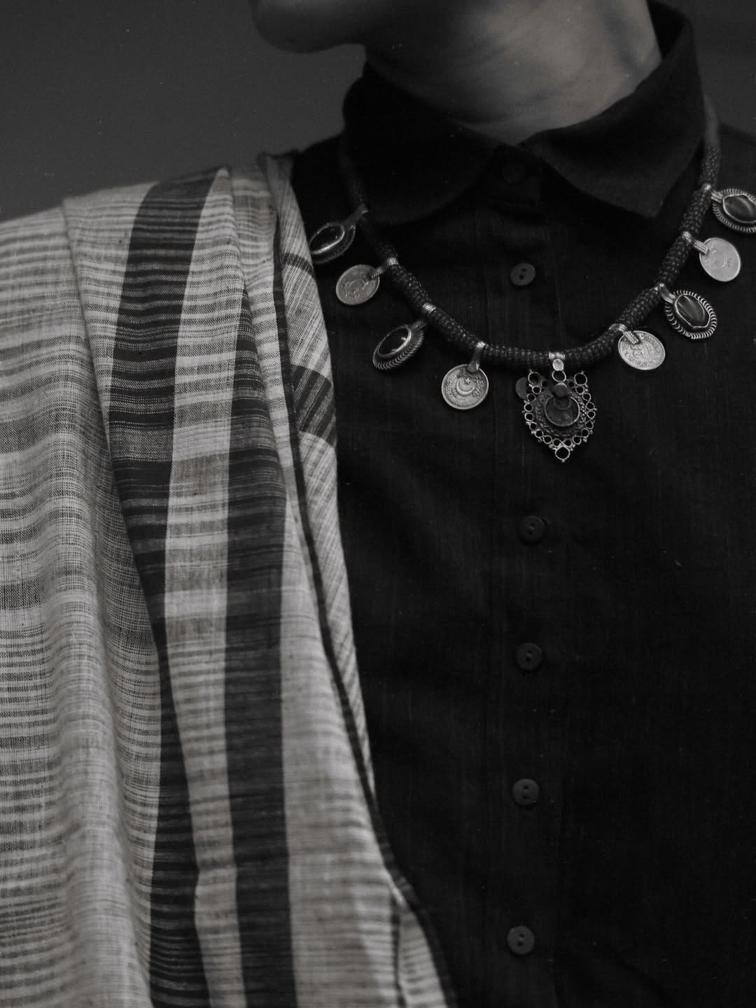
Indigo, kora, Indian madder—predictable on paper, but strategic in execution. The focus shifts to process credibility: weaving and embroidery rooted in the Sandur clusters of Karnataka.
This is less about silhouette innovation and more about system validation—positioning Khadi within institutional design frameworks that can scale without diluting craft.
Khadi Denim: Pawan Sachdeva’s Market Intervention
Pawan Sachdeva’s Swadeshi is arguably the most commercially disruptive segment.
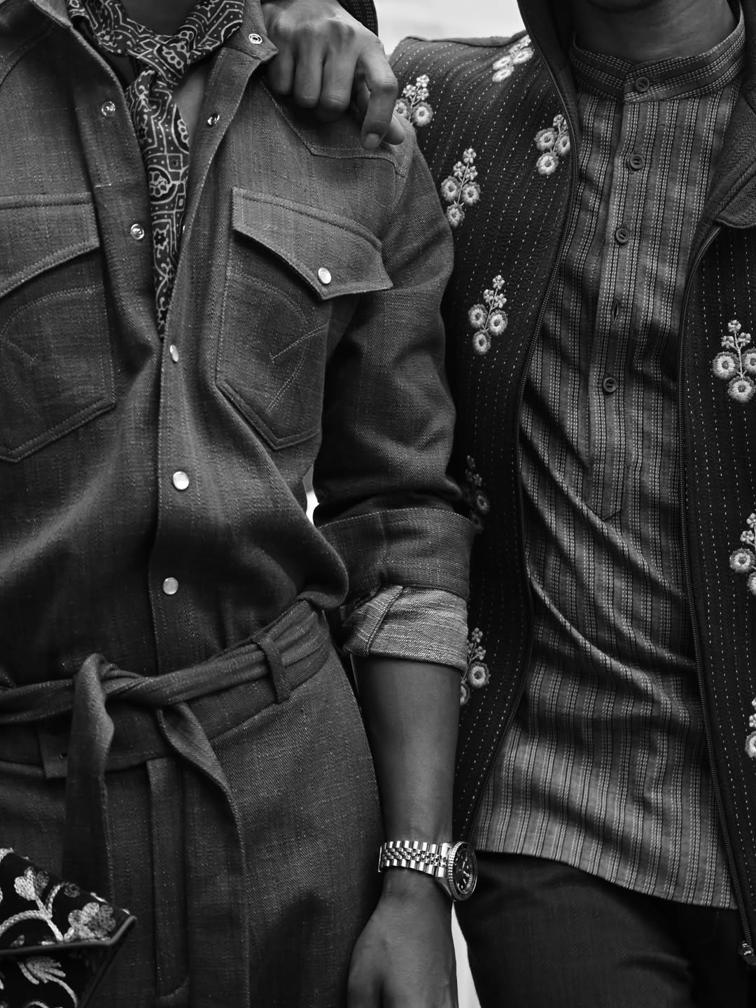
Khadi denim isn’t new—but treating it with organic washes and surface manipulation reframes it within a global casualwear vocabulary. This is Khadi moving from craft narrative into product category.
Translation: from runway statement to retail possibility.
Shruti Sancheti: Archiving Khadi’s Regional Complexity
Shruti Sancheti’s multi-chapter approach is the most academically layered.
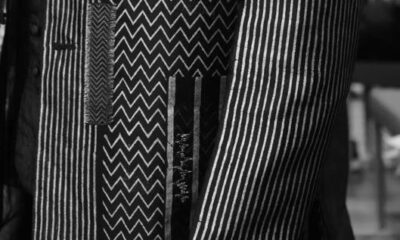
Working with clusters in Vidarbha, she expands Khadi beyond its mono-fabric identity—introducing blends (silk, wool, linen, cotton) and embedding regional vocabularies like Nagpur checks, Gond, and Warli motifs.
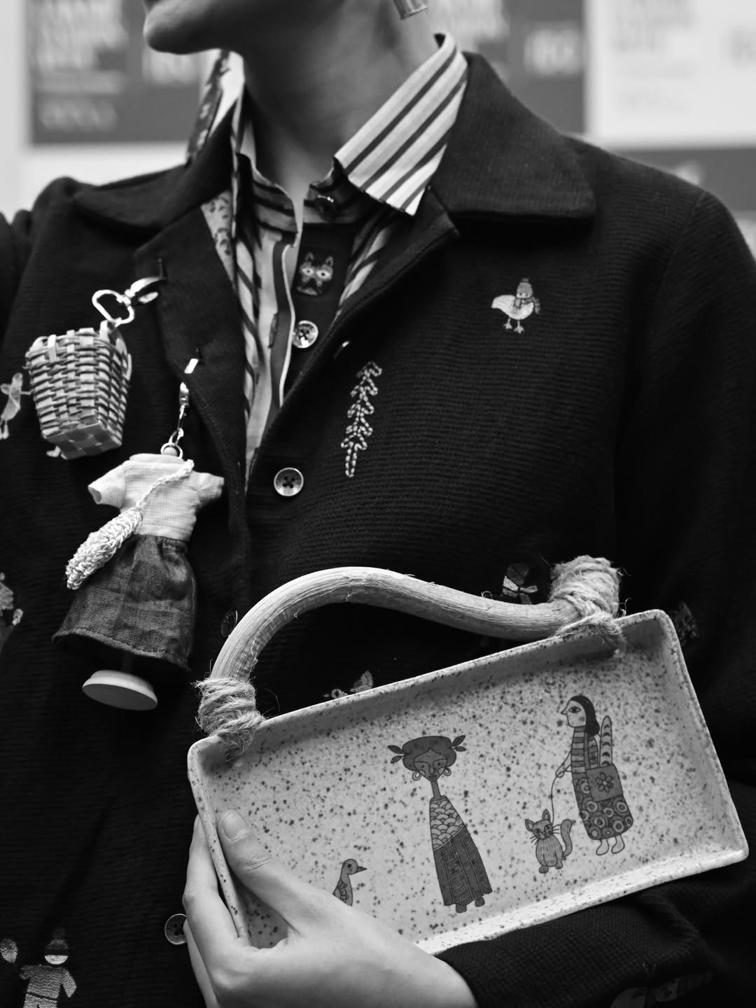
If others reinterpret Khadi, Sancheti documents its plurality—and in doing so, positions it as a textile ecosystem rather than a singular fabric story.
The Larger Shift: From Symbol to System
What Navdhara Khadi ultimately reveals is a quiet but significant industry pivot.
Khadi is no longer being defended. It is being deployed.
Across the showcase, three clear directions emerge:
- Material Hybridization – blending Khadi with silk, denim, and other fibres
- Process Credibility – foregrounding artisan clusters and institutional frameworks
- Market Translation – moving from ideological fabric to scalable product
For a fabric once locked in political symbolism, this is a strategic liberation.And perhaps that’s the real full-circle moment.