Editorial
Understanding How Macaulay Colonial Education Policy Destroyed India’s Cultural Identity
The story of India’s relationship with its own heritage is incomplete without acknowledging the profound impact of colonial-era reforms on the nation’s intellectual and cultural foundations. Among the most controversial figures of this period was Thomas Babington Macaulay, a 19th-century British politician whose 1835 “Minute on Indian Education” set the stage for a sweeping transformation of India’s learning systems. His proposal didn’t just introduce English-medium education — it fundamentally altered how generations of Indians viewed their own knowledge traditions.
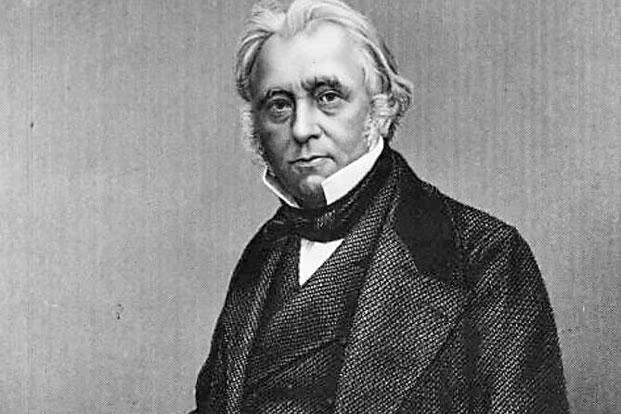
Macaulay arrived in India in 1834 with a viewpoint shaped entirely by imperial priorities. He considered Western knowledge inherently superior and saw India’s ancient yet advanced vedic systems as obstacles to British governance. His Minute advocated replacing traditional institutions with English education, arguing that it would produce a class of intermediaries who were Indian in appearance but Western in tastes, opinions, and intellect. What followed was not an evolution of education but the systematic sidelining of a rich, self-sustaining intellectual ecosystem of India.
Before this shift, India’s education landscape thrived through gurukuls and village pathshalas. These spaces nurtured scholars in mathematics, astronomy, medicine, philosophy, literature, and arts, creating a knowledge culture that was both sophisticated and deeply connected to local life. Texts such as the Vedas, Upanishads, Arthashastra, and works by pioneers like Aryabhata and Charaka reflected an intellectual depth that rivalled global scholarship of the time. But such an empowered society didn’t align with colonial interests.
The Macaulay policy directly undercut these systems. Funding was redirected exclusively toward English-medium institutions. Sanskrit colleges lost support, regional learning centres withered, and traditional sciences were dismissed as irrelevant. By the 1850s, English-language schools flourished in urban centres while indigenous institutions declined sharply. This wasn’t accidental; it was part of a larger cultural strategy that equated progress with Westernization, leaving many Indians estranged from their own heritage.
The long-term effects reshaped India’s creative and cultural psyche. A new elite emerged — proficient in English, educated in Western frameworks, and increasingly disconnected from traditional roots. This divide influenced not only education but social aspirations, governance, and even fashion sensibilities for generations. Western ideas became aspirational, while indigenous practices — from crafts to languages to design philosophies — were often undervalued or deemed outdated.
For industries rooted in creativity, especially fashion, this legacy has had a lasting influence. India’s textile traditions, artisan practices, and regional aesthetics — once central to daily life — were pushed to the margins. Handlooms, natural dyeing methods, and heritage crafts continued largely due to the resilience of artisan communities rather than institutional recognition.
Yet, the story doesn’t end there. Over recent years, a resurgence of cultural confidence has swept across the country. Designers, students, and creators are revisiting India’s diverse craft traditions with a renewed sense of pride. The growing appreciation for handloom, indigenous textiles, and artisanal techniques reflects a conscious move away from the long-standing colonial narrative that placed Western aesthetics above local ones.
Understanding the imapct of Macaulay helps us recognise why reclaiming our roots is not just nostalgic — it is necessary. Reviving indigenous knowledge is an act of cultural restoration. Celebrating Indian craftsmanship is a reclaiming of identity. And reconnecting with our own design heritage provides a path toward a more confident, self-defined creative future.
India’s legacy was never dormant; it was overshadowed. Today, as students, designers, and thinkers engage with the richness of Indian heritage, they are part of a movement that reframes tradition as innovation. The roots remain strong — and it is time for them to shape the next chapter of Indian creativity.