Business
From Quiet Luxury to Strategic Strength: The New Power Codes Emerging at NYFW 2026
NYFW 2026 is no longer whispering. It’s recalibrating.
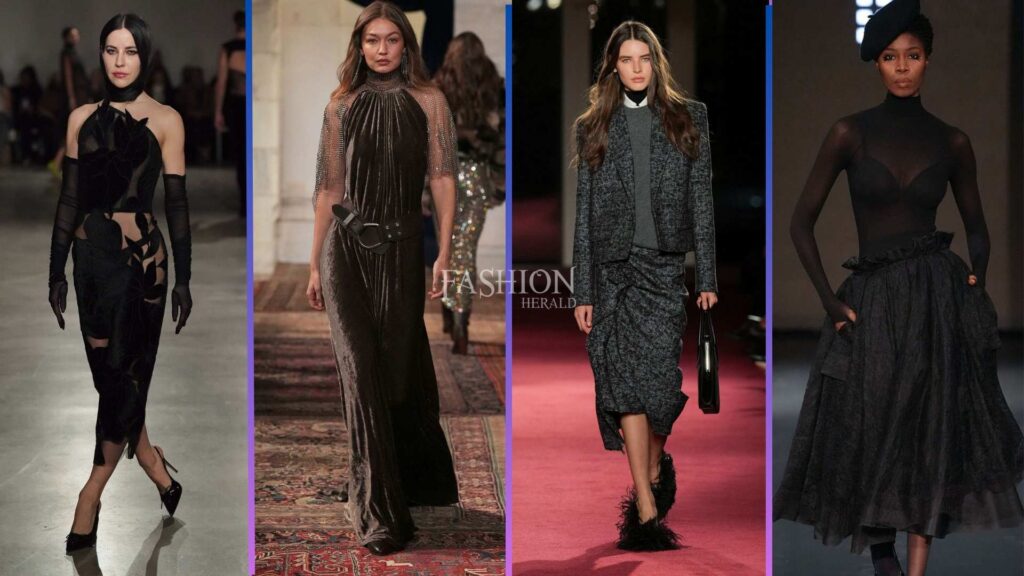
If 2025 belonged to “quiet luxury” — careful minimalism, hushed palettes, coded wealth — then 2026 feels far more intentional. This season, designers are presenting clothing not as comfort, but as control. Not as softness, but as structure.
Call it a pivot. Call it fatigue with understatement. What’s unfolding on the New York Fashion Week runways is sharper, more strategic, and unmistakably deliberate.
The Macro Trend: Protective Romanticism
There’s romance this season — but it’s armored.
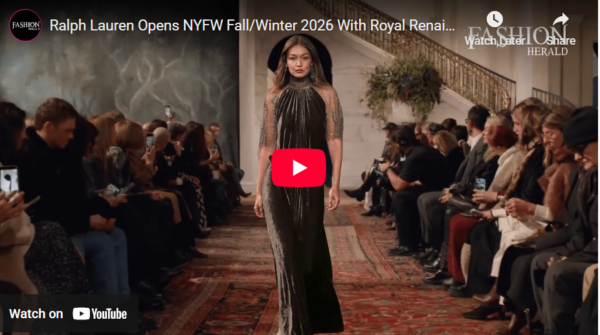
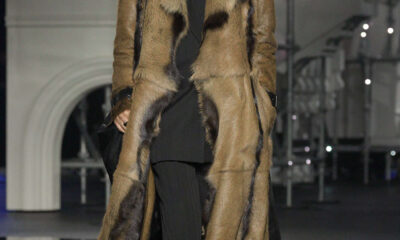
Across collections, tailoring has returned with authority. Subversive neckties, re-engineered suiting, and metallic hardware are no longer nostalgic callbacks; they are declarations. At Coach and Ralph Lauren, the tie wasn’t corporate — it was rebellious. Styled loosely, layered under oversized outerwear, it read less Wall Street and more controlled defiance.
Metal hardware followed the same logic. Brooches weren’t delicate heirlooms; they were structural punctuation marks. Silver waist chains cut through fluid dresses. Chain mail peeked through tailoring like a subtle warning.
Even in collections we’ve recently covered — from the refined polish of Michael Kors to the disciplined minimalism of Calvin Klein — there was an undercurrent of strength. Kors leaned into decisive silhouettes and urban polish rather than escapist softness. Calvin Klein’s sharp restraint felt less about serenity and more about control. Romeo Hunte continued to treat outerwear as protective architecture, with hybrid constructions that felt built for impact rather than ornament.Context matters.
With global markets projecting modest growth and consumers navigating economic unpredictability, fashion is mirroring a psychological shift. The 2026 customer isn’t dressing to disappear. They’re dressing to negotiate. To defend. To move.Romantic, yes. But ready.
The Business Shift: The Death of One-Size-Fits-All
The bigger story may not even be on the runway.
NYFW this season feels operational. Strategic. Lean.
The calendar is tighter — roughly 75 shows compared to the 300-show peak years. That contraction is not a creative compromise; it is a financial one. Efficiency is no longer optional. It is embedded into survival.
Inside innovation labs and retail partnerships, the message is even clearer. Hyper-segmentation is now baseline strategy. Brands are moving away from designing for “the customer” and toward designing for micro-communities powered by real-time data. AI-enabled personalization, predictive inventory modeling, and targeted drops are redefining what a runway even means.
Design and data are no longer separate conversations. The brands that win in 2026 are those who know exactly who they are selling to — and why.This is not the era of blanket aspiration. It is the era of targeted relevance.
NYFW 2026 SO Far
Cult Gaia marks a defining milestone with its first official NYFW runway. For years, the brand thrived as a digital-native success story — sculptural accessories turned social currency. The runway debut signals something more ambitious: scaling from viral product to structured luxury ecosystem.
This isn’t just a show. It’s a business case study. Transitioning from social media momentum to long-term luxury credibility requires operational depth, supply chain maturity, and consistent brand language. If executed well, this positions Cult Gaia as part of a new American luxury guard — digitally fluent, but institutionally validated.
Later tonight, Andrew Curwen closes with what many are calling “Nocturnal Conditions.” Dark, moody, yet functional eveningwear dominates the mood. This isn’t red-carpet fantasy. It’s urban nightwear built for movement — structured coats over fluid dresses, utility details embedded into evening silhouettes.
It captures the work-hard, play-hard ethos defining 2026: wardrobes designed to transition without costume change.
The Bigger Picture
NYFW 2026 isn’t loud for spectacle’s sake. It’s precise.
Designers are responding to instability — economic and emotional — by constructing garments that feel purposeful. Protective Romanticism is not about aggression. It is about preparedness.
On the business side, the message is equally clear: survival belongs to brands mastering efficiency, segmentation, and clarity of identity.If quiet luxury signaled wealth through restraint, this season signals resilience through design.New York isn’t whispering anymore.
It’s recalculating.