Editorial
Paris Fashion Week 2026 : Isabel Marant Fall–Winter 2026/2027- The Bekker Reset
At Paris Fashion Week, the Fall–Winter 2026/2027 collection from Isabel Marant quietly marked a structural shift for the brand.
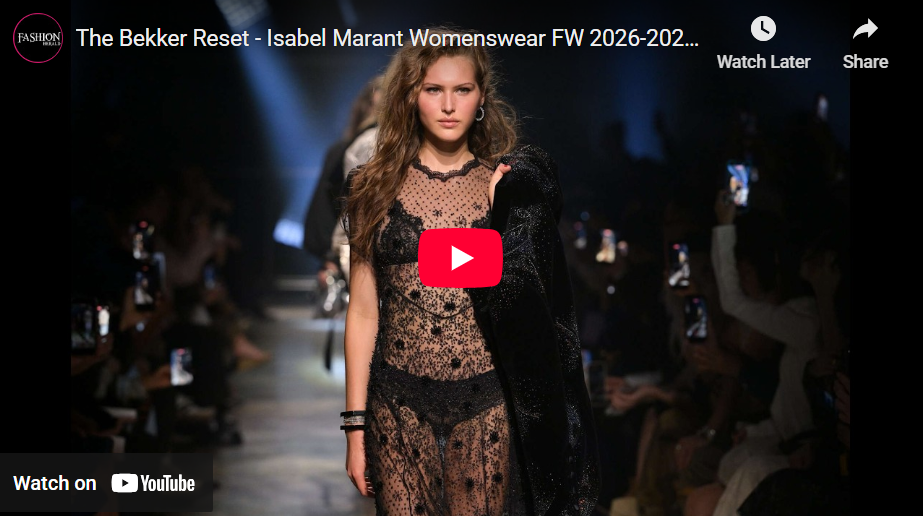
Under Creative Director Kim Bekker, the collection pivots away from the sun-faded nomadic romanticism that defined recent seasons. In its place emerges something sharper and more grounded — a disciplined wardrobe rooted in what can best be described as “Rugged ’90s Simplicity.”
Where previous Marant collections leaned into bohemian spontaneity, Bekker’s approach appears more edited. Silhouettes feel intentional, materials carry greater weight, and the styling focuses on foundational wardrobe pieces rather than decorative layering.
The result reframes the label’s signature Parisian cool through a more architectural lens.
The Rise of “New Simplicity”
Bekker’s design philosophy this season centers on subtraction rather than reinvention. The collection builds around wardrobe archetypes: the white T-shirt, the chore jacket, relaxed denim, and everyday sneakers.
Instead of presenting a stylized character, the runway reads like a curated wardrobe assembled over time. Pieces feel lived-in, practical, and quietly rebellious in their refusal to over-perform.
The aesthetic balance lands between 1990s grunge pragmatism and contemporary European minimalism. Rather than relying on embellishment, the focus shifts toward proportion, material quality, and subtle construction details.
A Palette Moving From Desert to City
The seasonal palette reinforces the shift in narrative.
The dusty desert tones that dominated Spring–Summer 2026 transition into deeper, urban neutrals. Sand and khaki remain, but they are joined by darker tones such as mahogany and midnight indigo, functioning almost as alternatives to black.
Occasional bursts of color appear in eggplant purple and sun-faded pink, offering contrast without disrupting the restrained atmosphere.
Denim, Utility, and Structural Ease
Among the most visible shifts this season is the treatment of denim.
Instead of distressed finishes, Bekker introduces “brut denim” — raw, stiff, and unwashed. The fabric takes on a sculptural quality when tailored into relaxed jeans and structured jackets, adding clarity and weight to the silhouette.
Utility garments also play a central role. Oversized chore jackets appear with pronounced flap pockets and visible contrast stitching, reinforcing the workwear narrative while maintaining the brand’s relaxed attitude.
Another motif appears through refined Japanese-inspired check patterns applied to heavy cotton jackets and mohair-blend knitwear. These textiles introduce tactile depth while avoiding overt statement prints.
Accessories Anchoring the Collection
Accessories appear strategically placed throughout the runway, anchoring the otherwise fluid silhouettes.
The standout is the Senny sneaker, positioned as the successor to the brand’s iconic Bekett wedge sneaker. The new version appears slimmer and more athletic, signaling a move away from the bulky sneaker dominance of recent seasons.Footwear also explores hybrid territory through ankle boot–loafer designs, blending the polish of a loafer with the rugged structure of an outdoor boot.
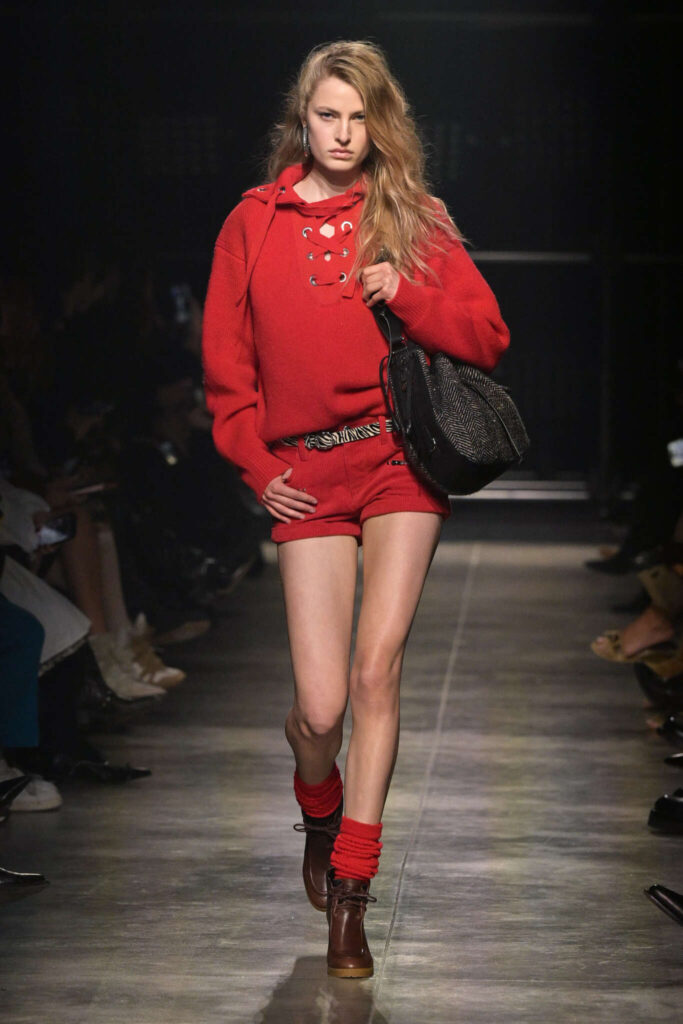
Bags lean softer in silhouette. The oversized “banana” tote, worn tucked under the arm or slung across the body, reinforces the collection’s relaxed everyday attitude.
Texture as Narrative
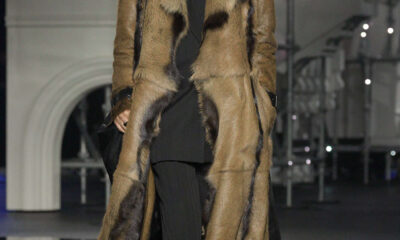
Leather and suede appear patinated, giving the impression of garments shaped by wear rather than pristine luxury. Knitwear introduces pierced constructions with subtle hardware elements, while washed silk appears in unexpected contexts such as sweatpants and slip dresses.
The contrast between rugged textures and fluid fabrics creates a layered visual narrative without overwhelming the simplicity of the garments.
The Bekker Direction
The most notable shift lies in the overall discipline of the collection.
While Isabel Marant’s earlier identity often celebrated spontaneity and bohemian ease, Kim Bekker introduces a more structured European design language. Fringe and ornamentation recede, replaced by controlled tailoring and careful proportion.
The garments appear easier to incorporate into everyday wardrobes, yet the precision of their cut gives them visual authority.
If earlier Marant seasons embraced movement and spontaneity, Fall–Winter 2026/2027 emphasizes clarity, structure, and restraint.
Within the broader landscape of Paris Fashion Week, the collection signals a quiet recalibration — suggesting the brand is entering a more considered phase while retaining its effortless Parisian attitude.