Celeb Style
Beyond the Red Carpet: How the Grammys 2026 Turn Fashion Into Cultural Positioning
For decades, the Grammys 2026 red carpet existed in a familiar orbit. Fashion arrived as spectacle, sometimes as excess, often as a supporting act to music’s biggest night. Designers chased visibility, stylists chased silhouettes, and the conversation the next morning revolved around “best dressed” lists that blurred into one another.
That model no longer holds.
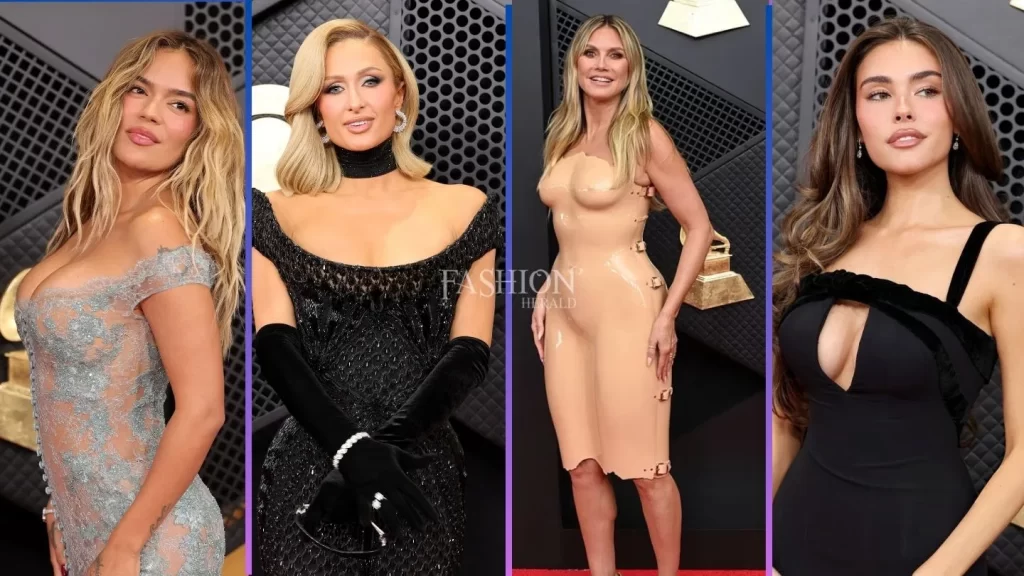
Today, fashion at the Grammys operates less as red-carpet dressing and more as cultural positioning. What artists wear is no longer about trends or couture credentials—it is about narrative control, identity signaling, and long-term brand alignment.
This shift is subtle but decisive, and it says as much about fashion’s changing power dynamics as it does about music’s influence on culture.
From Fashion Statements to Brand Declarations
At the Grammys 2026, outfits are no longer designed to exist in isolation. They are designed to mean something beyond the carpet.
An artist’s look now functions like a brand manifesto—compressing values, politics, personal mythology, and cultural allegiance into a single visual moment. The objective is not to set a fashion trend but to reinforce an identity already in motion.
Unlike film awards, where fashion still leans heavily on heritage houses and timeless glamour, the Grammys reward immediacy. What matters is not whether a look will age well, but whether it lands now—within a social and cultural moment that audiences already understand.
Fashion here has become language, not ornament.
Artists Have Taken Control of the Narrative
One of the clearest shifts is the transfer of power from fashion houses to artists themselves.
Previously, red carpets were prime real estate for designers to impose their aesthetic codes. At the Grammys today, designers are often secondary players. The artist—and their broader creative ecosystem—leads the narrative.
This is fashion used strategically:
- To reinforce an album era
- To visually extend a performance persona
- To challenge or align with cultural conversations already unfolding
The look is rarely about novelty. It is about continuity. Artists are not dressing for the carpet; they are dressing for the story they want remembered.
This has quietly reduced the relevance of traditional fashion validation. A look does not need to be couture-approved to succeed. It needs to be culturally legible.
Stylists Are Designing for Virality, Not Legacy
Another quiet but critical shift lies in the role of the stylist.
At the Grammys, stylists are no longer working within a legacy-driven fashion framework. They are operating within an attention economy. Success is measured in screenshots, reposts, debates, and think pieces—not in museum potential.
This has changed how fashion is approached:
- Risk is rewarded over refinement
- Recognition matters more than reverence
- Visual impact outweighs craftsmanship narratives
The result is fashion that is intentionally polarizing. Some looks are built to be misunderstood, memed, or questioned. That friction is not a failure—it is the strategy.
In this environment, couture techniques and fashion history matter less than shareability and symbolism.
Why Fashion Houses Keep Misreading the Grammys
Many luxury brands still approach the Grammys as they would Cannes or the Oscars, expecting controlled glamour to translate into cultural relevance. It often doesn’t.
The Grammys are not a space for quiet luxury or archival reverence. They are a testing ground for how fashion performs in real-time culture. Brands that succeed here understand that control must be loosened. The artist’s narrative must take precedence over the label’s codes.
This is uncomfortable for fashion houses built on authorship and aesthetic discipline. But the Grammys reward flexibility, not rigidity.
Those who adapt gain visibility that feels organic. Those who don’t often fade into the background—technically present, culturally absent.
The Grammys 2026 as a Mirror of Fashion’s Future
What happens on the Grammys red carpet is not an outlier. It is a preview.
Fashion’s role in culture is shifting away from trend leadership and toward narrative participation. The Grammys simply expose this reality more clearly than most fashion-centric events.
Here, fashion is not dictating culture—it is responding to it, amplifying it, and sometimes struggling to keep up.
In that sense, the Grammys are no longer about fashion moments at all. They are about who understands cultural positioning—and who is still dressing for an era that no longer exists.
For fashion brands, stylists, and editors alike, the message is clear: relevance today is not sewn. It is constructed, contextual, and controlled by those who understand culture before silhouette.
And the Grammys have already moved on.