Business
The Hermès blueprint: How Axel Dumas maintains peak exclusivity amidst record €16bn revenues
The prevailing industry narrative suggests that luxury demand in China has cooled, that aspirational spending is under pressure, and that brands must recalibrate to protect growth. Yet Hermès closed 2025 above €16 billion in revenue, continuing to expand across Asia, including Greater China, despite currency headwinds and shifting consumption patterns. The takeaway is not that China is immune to slowdown. It is that Hermès operates on a model structurally insulated from it.
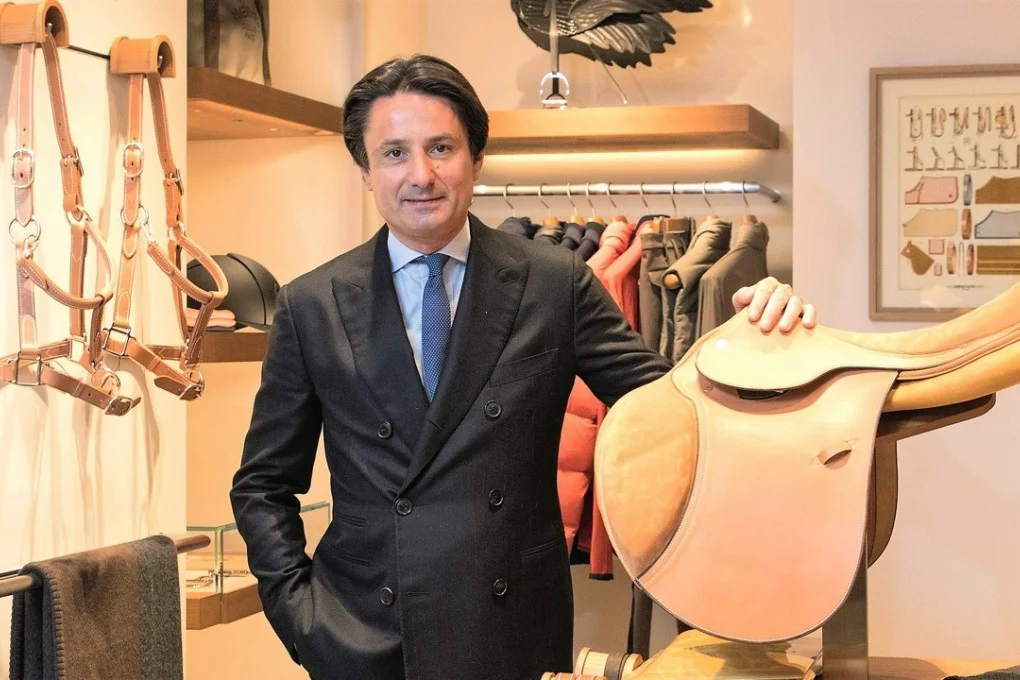
Since becoming CEO in 2013, Axel Dumas has reinforced a framework built on balance rather than acceleration. Leather goods, once 55% of sales, now represent roughly 45%. The shift is intentional. Ready-to-wear, jewellery, footwear, home, watches, and beauty have expanded steadily, reducing reliance on a single category while strengthening the brand ecosystem. In a maturing market like China, where top-tier clients seek depth rather than logos, that diversification strengthens retention without diluting prestige.
Hermès also resists the industry’s marketing reflex. The house operates without a traditional marketing department, allowing each métier to advance its creations independently before commercial alignment. The internal dialogue between creative and buying functions creates friction, but it preserves identity. The result is a portfolio of approximately 50,000 active SKUs—far above consultant-recommended norms. While this increases operational complexity, it reinforces brand dimensionality and shields Hermès from overexposure, a vulnerability that has affected several competitors in China’s saturated luxury landscape.
Craft remains the core growth engine. A single handbag requires roughly 16 hours of manual work, inherently capping production volumes. Scarcity is therefore embedded in manufacturing reality rather than constructed through artificial drops. In 2025, the group invested €226 million to strengthen production capacity, opening its 24th leather goods factory and planning additional sites through 2030. These expansions are calibrated, not industrial scale-ups, ensuring output rises without eroding rarity.
Simultaneously, Hermès is deepening vertical integration. The acquisition of French tanneries, stakes in jewellery workshops, investments in Italian footwear expertise, and continued development of Swiss watchmaking capabilities reflect a strategy of industrial control. By safeguarding artisanal know-how and material access, the brand reduces supply vulnerability and protects quality consistency. In China, where ultra-high-net-worth consumers increasingly interrogate provenance and craftsmanship, this reinforces long-term credibility.
Price adjustments of 5–6% at the start of 2025 further underline structural strength. For brands dependent on aspirational volume, price increases in a cautious market risk demand contraction. For Hermès, they reaffirm positioning. When scarcity is production-based and client relationships are cultivated over years, pricing power becomes a stabilizer rather than a gamble.
Category expansion continues with measured ambition. Beauty is scaling, fragrances are approaching critical mass, and skincare is forthcoming. More strategically significant is the quiet development of a haute couture expression. New ateliers have been assembled and specialist dressmakers recruited, but presentation will occur only when the house deems the work complete. The absence of calendar-driven urgency reinforces Hermès’ long-standing discipline: desirability precedes visibility.
The broader implication for China is clear. The market is not collapsing; it is stratifying. Brands built on velocity and distribution density feel the correction first. Brands built on craft density, category balance, and controlled capacity prove more resilient. Hermès does not escape macroeconomic shifts, but its structural choices—limited volumes, industrial integration, diversified métiers—mitigate volatility.
In a luxury cycle increasingly defined by recalibration, Hermès is not pivoting. It is executing a decades-long philosophy with precision. And in China’s evolving hierarchy of demand, that consistency continues to compound.