Events
CHANEL Métiers d’Art 2026: A Refined Ode to New York’s Electric Spirit
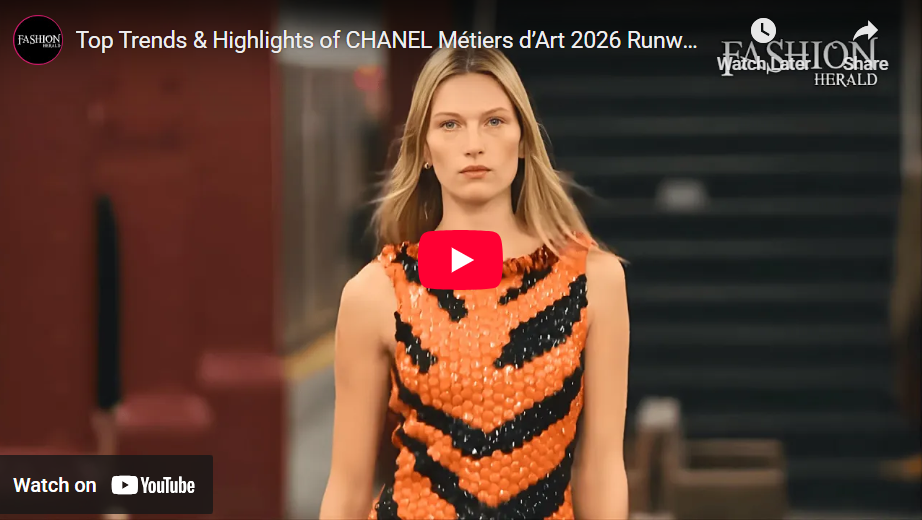
CHANEL reimagined the language of couture with its Métiers d’Art 2026 show, staged within the atmospheric depths of New York’s decommissioned Bowery subway station. The setting — a deserted platform illuminated by the glow of a stationary train — offered a poetic contrast between the city’s raw pulse and the maison’s unparalleled craftsmanship. It was an encounter between grit and elegance, handled with intention under Matthieu Blazy’s expanding creative vision.
A City Interpreted Through Its Characters
Rather than treating New York as a simple backdrop, Blazy transformed it into a narrative framework. The collection unfolded like a series of portraits — the 1970s journalist with practiced poise, the 1980s power woman in precision tailoring, the ever-vibrant showgirl, the curious student, the socialite navigating a night out, the mother moving through the city with quiet authority.
Each silhouette traced a different human rhythm, turning the runway into a living tableau of metropolitan identity. There was an unmistakable homage to Gabrielle Chanel’s own fascination with New York during her 1931 visit, when she recognized the city’s innate ability to make personal style feel both democratic and aspirational.
Craftsmanship in Conversation with the City
Blazy’s Métiers d’Art collection drew seamlessly from multiple decades while preserving CHANEL’s signature codes. The craftsmanship of Lesage, Lemarié, and other ateliers was evident in every detail — from the fine Art Deco embroidery to the sculptural feather work and precisely beaded motifs.
Highlights included:
Art Deco refinement
Embellished dresses and ensembles featuring intricate fringe, beadwork, and feather detailing, reflecting a modern interpretation of 1930s elegance.
The illusion of “lingerie denim”
Chiffon engineered to resemble denim created one of the collection’s most intriguing statements — a playful twist on New York’s casual uniform elevated to couture-level artistry.
Tailoring with metropolitan confidence
Pinstripe suits evoking financial-district power, neon-flecked skirt suits inspired by downtown individuality, and CHANEL’s bouclé reimagined into oversized flannel silhouettes struck a harmony between heritage and contemporary edge.
Showstopping couture moments
A sweeping green leopard-print gown, bold asymmetrical fringe suits, and red-carpet-ready silhouettes anchored the collection in theatrical luxury.
The Bowery Station Reimagined
The choice of venue underscored the show’s thematic precision. In New York’s subway — a space where all identities converge — CHANEL presented a vision of couture that is grounded, culturally aware, and attuned to the city’s diverse energy. Vintage phone booths, cinematic lighting, and carefully crafted mise-en-scène elements blurred the boundaries between performance and the everyday experience of urban transit.
Influence, Presence, and Cultural Resonance
The front row brought together a spectrum of influential voices from film, fashion, and music, reinforcing the show’s place within the global style conversation. Their presence amplified the moment, but it was the storytelling on the runway that ultimately held the evening’s emotional weight.
Reactions to Blazy’s vision varied — as they often do with boundary-pushing couture — yet the collection’s ambition and clarity were unmistakable. It showcased a house willing to explore new cultural terrain while honoring its legacy of craftsmanship.
A Closing Reflection: Couture for the Modern Metropolis
With the Métiers d’Art 2026 presentation, CHANEL offered a sophisticated narrative about the meeting of craft and culture. Blazy wove together the city’s lived realities with the maison’s heritage, creating a collection that felt deeply connected to New York’s spirit — its diversity, its dynamism, and its enduring sense of possibility.
For a brand rooted in Parisian refinement, the decision to bring couture underground was a deliberate and meaningful contradiction. It was an affirmation that craftsmanship remains relevant in every corner of the contemporary world — even within the rhythmic, ever-moving heart of a New York subway station.